Shri Radha Ballabh Lal Ji Temple Vrindavan
Shree Radha Ballabh Temple Vrindavan Darshan Guide
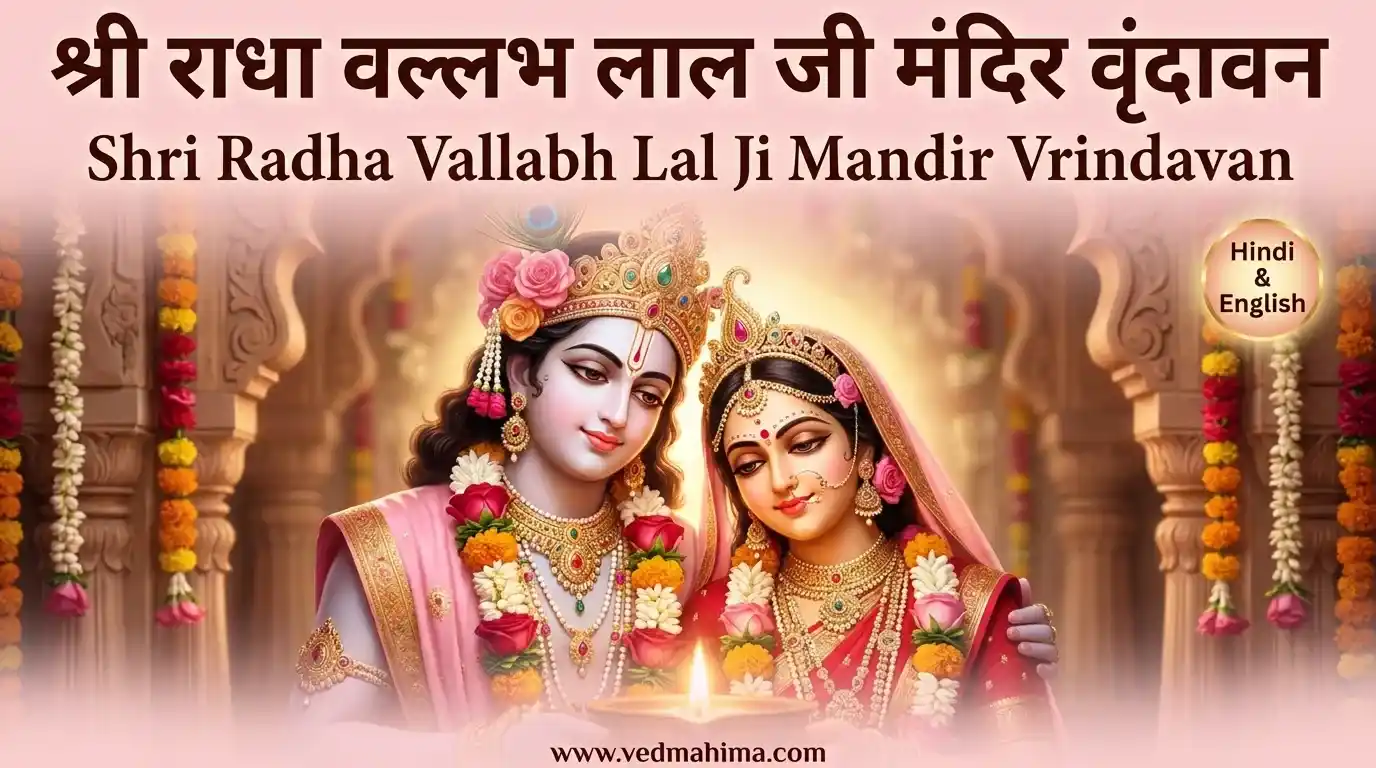
* Hit Harivansh Mahaprabhu: The temple was founded by the great saint Sri Hit Harivansh Mahaprabhu, who brought the dynamic, self-manifested deity of Radha Ballabh Lal from Charthawal to Vrindavan under divine instructions.
* The Seva-Prakatya Tradition: The worship here does not follow standard scriptural rituals or structural rules of fear; instead, it is entirely based on Sakhibhava and the loving service of a close companion, offering comfort, music, and seasonal luxuries to the Lord.
* The Red Sandstone Heritage: The old historical temple structure, built during Akbar's reign, stands as a brilliant specimen of ancient Hindu-Islamic cross-architectural style, constructed with thick red sandstone pillars.
1. Mangala Aarti (05:00 AM - 05:30 AM): The supreme morning awakening. The curtains are pulled back gently, and the deity is offered morning refreshments amidst the chanting of sweet Brij bhasha stotras.
2. Dhoop Aarti & Shringar Darshan (08:30 AM - 10:30 AM): The main morning window where the deity is artistically adorned in heavy silk vestments, exquisite jewelry, and fresh flower garlands.
3. Rajbhog Aarti (12:00 PM - 12:30 PM): The grand mid-day meal offering comprising rich traditional sweets, dynamic rice preparations, and delicacies, after which the Lord retires for afternoon rest.
4. Sandhya Aarti (06:30 PM - 07:15 PM): The beautiful evening twilight worship. The entire hall resonates with Samaj Gayan (devotional singing) as heavy brass oil lamps are swung before the deity.
5. Shayan Aarti & Closure (08:30 PM - 09:00 PM): The final musical prayers where sweet milk and paan (betel leaf) are offered before the inner sanctum curtains are closed for the night.
* General Entry & Darshan (Cost: FREE): Entering the main temple courtyard and participating in all standard aartis is completely free for all walking pilgrims. No VIP passes are sold by the trust.
* Charan Darshan Rule: Devotees can only see the holy lotus feet of Radha Ballabh Lal Ji once a year on the auspicious day of Radhashtami. On all other days, the feet remain covered with heavy dynamic drapery.
* Samaj Gayan (Devotional Singing): Visitors are highly encouraged to sit in the outer mandapa during evening hours to experience the unique classical Dhrupad-style singing performed by the hereditary temple musicians.
* Hit Utsav & Radhashtami: The grandest celebrations of the year, lasting for several days. Special community feasts, dynamic musical processions, and grand midnight aartis are conducted.
* Holi / Jhulan Yatra: During spring and monsoon, the deity is playfully adorned with herbal gulal colors and swung on massive silver-plated swings (Hindola) amidst deep ecstatic chanting.
* By Air (Flights): The nearest operational international airport is Indira Gandhi International Airport (DEL) in New Delhi, located approximately 165 kilometers away. Travelers can comfortably charter private AC taxis via the Yamuna Expressway to reach Vrindavan in under 3 hours.
* By Train (Railways): The nearest high-frequency railway station is Mathura Junction (MTJ), situated roughly 12 kilometers from the temple. Superfast trains from all major Indian cities stop at Mathura. Local auto-rickshaws and e-rickshaws run frequently straight to the Vrindavan entry barrier.
* By Road (Highways): Wide national highways connect Mathura and Vrindavan smoothly to Delhi, Agra, and Jaipur. Regular state-run UPSRTC buses and private luxury Volvo coaches operate continuously from Delhi's ISBT straight to the Vrindavan chatikara cut.
⏰ Best Time
The ideal time to visit Radha Ballabh Temple is from October to March when the weather in Vrindavan is cool and pleasant for navigating the ancient lanes. Visiting during the early morning Shringar Darshan ensures a profoundly peaceful experience.
🛕 Temple Information
Shree Radha Ballabh Lal Ji Temple Trust, Gotam Nagar, Vrindavan, Mathura, Uttar Pradesh - 281121
Temple Gates Open: 05:00 AM
Mangala Aarti: 05:00 AM - 05:30 AM
Shringar Darshan: 08:30 AM - 10:30 AM
Rajbhog Aarti & Closure: 12:00 PM - 12:30 PM
Evening Reopens: 06:00 PM
Sandhya Aarti: 06:30 PM - 07:15 PM
Shayan Aarti & Closure: 08:30 PM - 09:00 PM
🔗 Related Trending Mandir

About Shri Radha Ballabh Lal Ji Temple Vrindavan
The glorious history of Shree Radha Ballabh Lal Ji Temple represents a monumental turning point in the spiritual revival of the Brij region during the medieval Bhakti movement. The theological origin of the deity is deeply mystical, as detailed in the sacred accounts of the Radhavallabh sampradaya. The beautiful deity of Radha Ballabh Lal was not carved by any human sculptor; instead, it was self-manifested (Prakat) through the intense, confidential checking of a pious Brahmin named Atmadeva in Charthawal, near Saharanpur, owing to his generations of single-minded devotion to Lord Shiva. Lord Shiva, moved by Atmadeva's absolute surrender, emerged from his meditative trance and handed over this radiant, combined form of Radha-Krishna to him, stating that worshipping this deity ensures supreme spiritual liberation.
The destiny of the deity shifted dramatically with the arrival of Sri Hit Harivansh Mahaprabhu, who is scripturally revered as the incarnation of Lord Krishna's divine flute (Vansh). Under a direct command received from Shri Radha in a vision, Mahaprabhu left his home and journeyed toward Vrindavan. Along the way, he met Atmadeva, who happily handed over the divine deity to him as per celestial instructions. In the year 1534 AD (Samvat 1591), Sri Hit Harivansh Mahaprabhu established the first humble seat for Radha Ballabh Lal Ji on a high sand dune near the banks of the River Yamuna in Vrindavan, called Madan Ter. He initiated the unique Ras-Upasana, a form of continuous, sweet meditative service focused entirely on the confidential pastimes of the divine couple in the groves of Nidhivan and Seva Kunj.
As the centuries progressed, the physical structures surrounding the deity evolved magnificently. In the late 16th century, specifically around 1585 AD, a massive red sandstone temple structure was erected under the direct patronage and supervision of Sundardas Bhatti, a royal treasurer and minister in the court of the Mughal Emperor Akbar. This historic building featured thick fort-like walls designed to withstand external forces. During the later years of political turbulence and medieval raids in the Brij area, the main deity was safely concealed and briefly relocated to Kamavan (Rajasthan) to prevent desecration, later returning to Vrindavan when stability was restored. The modern marble complex seen standing today was constructed adjacent to the old site to accommodate the massive explosion of national and global pilgrims. Today, the administration is strictly preserved by the hereditary Goswami descendants of Sri Hit Harivansh Mahaprabhu, ensuring that the ancient musical heritage of Samaj Gayan, the distinct aesthetic standards of Nikunj Seva, and the unalloyed purity of divine love remain protected for generations to come.