Shri Radha Madan Mohan Temple Vrindavan
Shree Radha Madan Mohan Temple Vrindavan Darshan Guide
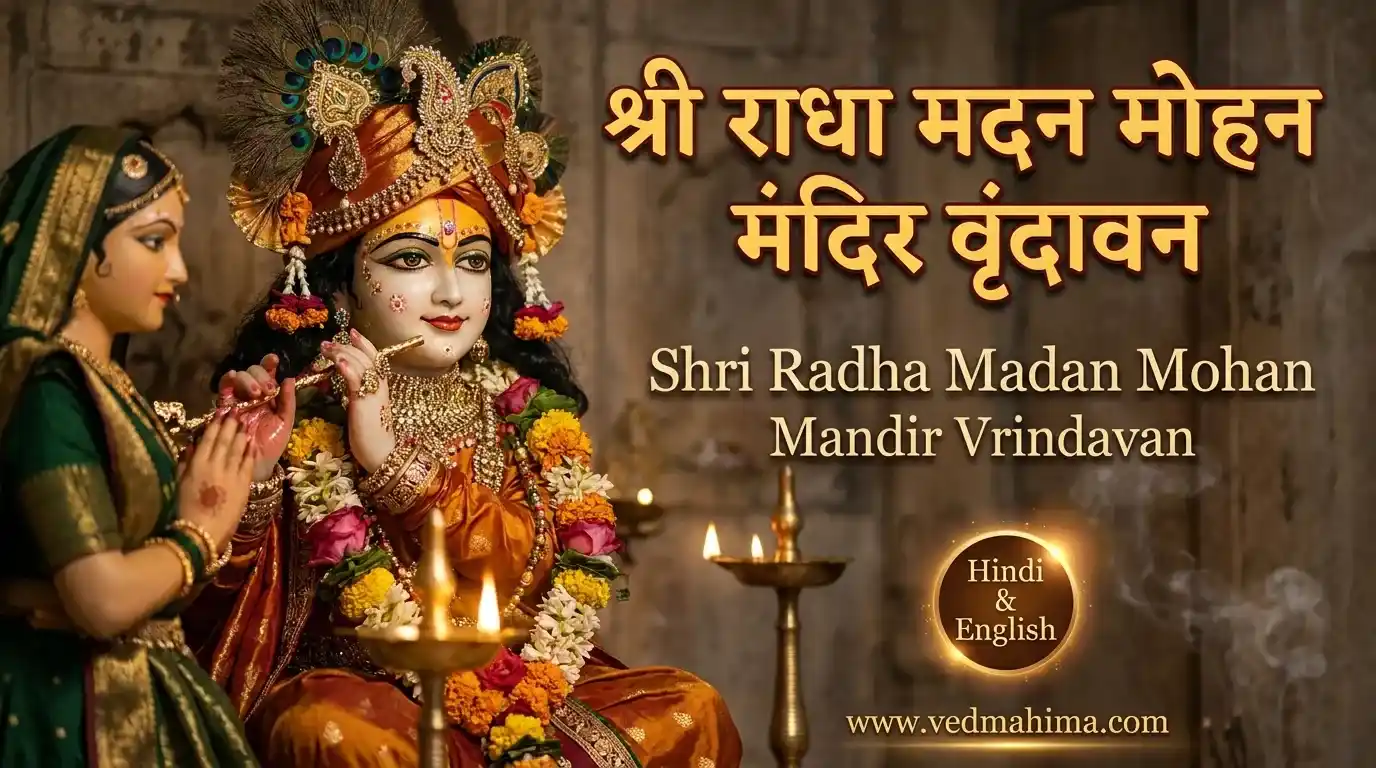
* The Prati-Bhu Vigraha (Replica): To protect the Lord from medieval raids, the original ancient deity was safely relocated to Karauli, Rajasthan. Today, a highly sacred, structurally identical replica (Prati-Bhu Vigraha) resides on the main altar, possessing the exact same spiritual potency.
* The Red Volcanic Brick Fortress: The temple is an architectural marvel of the late 16th century, built entirely out of heavy red terracotta bricks and volcanic stone. Its towering 57-foot multi-tiered dome resembles a fortress, standing strong against the passage of centuries.
* Sanatana Goswami's Samadhi: The holy compound houses the quiet, highly sacred samadhi pavilion of Srila Sanatana Goswami, serving as a powerful spiritual powerhouse for silent meditation.
1. Mangala Aarti (05:00 AM Summer / 06:00 AM Winter): The beautiful morning awakening. The temple bells echo softly across the Yamuna valley as the curtains open to greet early pilgrims.
2. Shringar Darshan & Bhog (08:30 AM - 10:30 AM): The morning window where the deity is artistically adorned with traditional Brij ornaments, tulsi leaves, and fine drapes.
3. Rajbhog Aarti (12:00 PM - 12:30 PM): The grand mid-day worship. The deity is offered traditional simple bhog (including Madan Mohan Angak—a simple baked flour preparation historically served by Sanatana Goswami), after which the sanctum closes for afternoon rest.
4. Sandhya Aarti (06:30 PM - 07:15 PM): The breathtaking twilight worship. As the sun sets behind the Yamuna river, the red sandstone towers are illuminated by classic oil lamps amidst rhythmic bell ringing.
5. Shayan Aarti & Closure (08:30 PM - 09:00 PM): The final musical prayers of the day, bringing absolute stillness over the hillock before the massive wooden gates lock for the night.
* General Entry & Darshan (Cost: FREE / Nil): Climbing the stone steps to the hillock and accessing the main courtyard is completely free of cost for everyone. No commercial fast-track tickets exist.
* The Holy Steps Challenge: Since the temple is built on an elevated hillock (Tila), visitors must climb around 40-50 steep ancient stone steps. Elderly travelers are advised to ascend slowly using the side railings.
* Dress Code and Sanctity: Out of respect for the ancient monastic lineage of the Goswamis, visitors must wear modest clothing. Avoid short attire inside the main courtyard boundaries.
* Krishna Janmashtami: Celebrated with profound spiritual intensity, featuring deep midnight prayers, extensive traditional leaf decorations, and Vedic chanting echoing through the historic red corridors.
* By Air (Flights): The nearest international airport is Indira Gandhi International Airport (DEL) in New Delhi, situated 165 km away. Travelers can comfortably charter private taxis via the Yamuna Expressway to reach Vrindavan in under 3 hours.
* By Train (Railways): Mathura Junction (MTJ) is the nearest high-frequency station, located 12 kilometers away. Local auto-rickshaws and e-rickshaws run regularly from the station directly to the base of the Madan Mohan hillock.
* By Road (Highways): Well-maintained roads connect the temple to the major Vrindavan entry roads. Due to the very narrow lanes of the old town, private cars should be parked in designated spots near the Yamuna bank road, followed by a brief walk or e-rickshaw ride.
⏰ Best Time
The ideal time to visit Radha Madan Mohan Temple is from October to March when the weather in Vrindavan is cool and pleasant for climbing the stone steps. Visiting during the early morning hours or sunset Sandhya Aarti provides an exceptionally cinematic view of the Yamuna River.
🛕 Temple Information
Shree Radha Madan Mohan Dev Ji Temple, Dvadasaditya Tila, Near Kaliya Deha Ghat, Vrindavan, Mathura District, Uttar Pradesh - 281121
Summer Timings:
Mangala Aarti: 05:00 AM
Shringar Darshan: 08:30 AM - 10:30 AM
Rajbhog Aarti & Closure: 12:00 PM - 12:30 PM
Evening Reopens: 05:30 PM
Sandhya Aarti: 06:30 PM
Shayan Aarti & Closure: 08:30 PM - 09:00 PM
Winter Timings:
Mangala Aarti: 06:00 AM
Shringar Darshan: 09:00 AM - 11:00 AM
Rajbhog Aarti & Closure: 12:00 PM - 12:30 PM
Evening Reopens: 05:00 PM
Sandhya Aarti: 06:00 PM
Shayan Aarti & Closure: 08:00 PM - 08:30 PM
🔗 Related Trending Mandir

About Shri Radha Madan Mohan Temple Vrindavan
The magnificent history of Shree Radha Madan Mohan Dev Ji Temple marks the very dawn of written architectural history in the sacred landscape of Vrindavan during the medieval Bhakti movement. The theological origin of the beautiful deity is deeply historical, tracing back thousands of years to Vajranabha, the great-grandson of Lord Krishna, who originally established the core deities of Braj. Over the centuries, during the long eras of political dislocation, the deity was lost and remained hidden deep within the earth near the Yamuna riverbed. The modern history of the temple began in the early 16th century with the arrival of Srila Sanatana Goswami, the senior-most disciple sent by Sri Chaitanya Mahaprabhu. Sanatana Goswami established a humble mud hut on top of the Dvadasaditya Tila (where the Sun God historically performed austerities to warm Lord Krishna after his subduing of the Kaliya serpent). He discovered the beautiful deity of Madan Mohan hidden under a tree and began serving Him daily with extreme ascetic devotion, offering only water and simple unbaked thick flour balls known as Angak.
The transformation from a humble mud hut to a grand stone monument occurred around 1590 AD. A wealthy merchant from Multan named Ram Das Kapoor was navigating a massive commercial ship filled with goods along the Yamuna River when his vessel got severely stuck on a sandbank right below the hillock. Dismayed, he climbed the hill to seek blessings from the famous saint Sanatana Goswami. Following the saint's prayers to Madan Mohan Dev Ji, the river waters rose miraculously, freeing the ship, which allowed the merchant to secure immense wealth from his trade. Filled with deep gratitude, Ram Das Kapoor surrendered his earnings to construct a grand red volcanic stone and terracotta brick temple on top of the hill. In the late 17th century, when the fanatic forces of Aurangzeb raided Vrindavan and broke the upper section of the beautiful tower, the original deity was safely escorted overnight by the local Goswamis to Jaipur, and later to the independent state of Karauli in Rajasthan, where it resides elegantly to this day. The temple in Vrindavan subsequently established a highly sacred Prati-Bhu Vigraha (the authorized replica), which receives the identical daily worship and ancient custom protocols. Today, the temple stands proudly as an internationally recognized protected monument of national heritage, managed with meticulous spiritual discipline by the hereditary Goswami families to keep its ancient aesthetic aura completely intact.