Yamunotri Temple Uttarkashi
Yamunotri Temple Uttarkashi Complete Char Dham Yatra Guide
🙏 Devotional
🔥 Powerful
📿 Daily Prayer
॥ Temple Overview & Divine Glory ॥
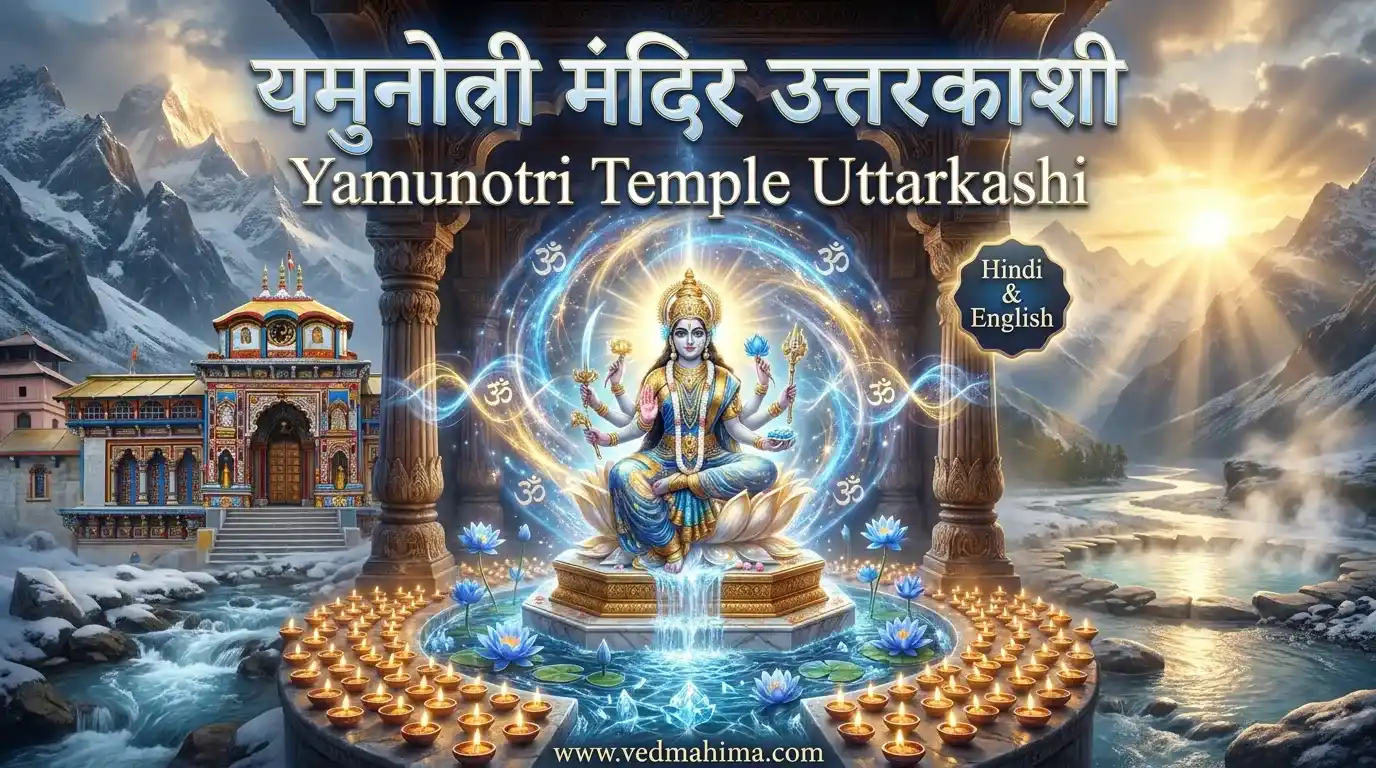
The sacred Yamunotri Temple, standing at a breathtaking altitude of 3,293 meters (10,804 feet) in the western region of the Garhwal Himalayas in Uttarkashi district, Uttarakhand, is the revered first stop of the holy Chota Char Dham Yatra. Positioned beneath the majestic Bandarpoonch peak, this mountain citadel marks the spiritual origin of the sacred River Yamuna. The temple is dedicated to Goddess Yamuna, who, in Hindu cosmology, is the daughter of Surya (the Sun God) and sister of Yama (the God of Death). Because of this divine lineage, it is deeply believed that a holy dip in the freezing waters of the Yamuna and offering prayers here completely eliminates the fear of untimely death, cleanses the soul of all moral impurities, and shields devotees from the judgments of Yama. The spiritual energy of the temple is heightened by the presence of natural, boiling-hot sulfur springs rushing out from the freezing mountain rocks. Accessible only via a challenging 5.5 to 6-kilometer trek from Janki Chatti, this remote shrine is a testament to unshakeable faith, where the echoing sounds of mountain streams and Vedic hymns create an intense environment of divine transcendence.॥ Key Spiritual & Structural Aspects ॥
* The Multi-Tiered Architecture: The temple presents a simple yet extremely resilient structure built in the traditional Himachali and Katyuri architectural style. Constructed with sturdy grey stone blocks and reinforced with heavy wooden beams to withstand massive winter snow loads, the shrine features a prominent bright yellow and red conical tower (Shikhara) that stands out beautifully against the gray Himalayan cliffs.* The Enshrined Deity: Inside the compact, dim-lit inner sanctum sits the highly sacred idol of Goddess Yamuna carved out of pure black marble, adorned with shimmering silk vestments and heavy silver ornaments. Next to her sits a small image of Goddess Ganga, symbolizing the eternal unity of India's holy waters.
* The Miraculous Surya Kund: The most fascinating feature of the temple complex is the 'Surya Kund', a natural geothermal hot water spring right outside the shrine. Rushing out at a near-boiling temperature of about 88°C (190°F), this water is considered highly divine. Devotees dip raw rice and potatoes tied in muslin cloths into this spring; the food cooks within minutes and is taken back home as holy 'Prasadam'.
* The Sacred Divya Shila: Located right next to the Surya Kund is a massive rock pillar known as the 'Divya Shila' (The Divine Rock). According to ancient Agamic traditions, pilgrims must offer prayers and bow before this sacred rock formation before stepping inside the main temple sanctum for Goddess Yamuna's darshan.
* The Gauri Kund (Thermal Bath): Just below the Surya Kund sits the Gauri Kund, a beautifully constructed thermal pool where the boiling spring water is mixed with cold mountain streams, creating a warm, comfortable pool where pilgrims take a refreshing holy bath before entering the temple lines.
॥ The Actual Ritualistic Cycle: Authentic Daily Chants & Schedules ॥
The daily spiritual administration at Yamunotri Temple is maintained with strict ancient traditions by the hereditary priests hailing from the nearby Kharsali village, operating inside these specific windows during the open season:1. The Morning Awakening & Mangala Aarti (05:30 AM - 06:30 AM): The daily rituals begin at dawn. The inner gates are unlocked as priests chant special morning awakening prayers. The black marble deity undergoes a ritualistic morning wash, followed by the grand Mangala Aarti, which is attended by pilgrims who stayed overnight at the shrines.
2. Shringar & General Public Darshan (06:30 AM - 12:00 PM): Following the morning aarti, the deity is beautifully dressed in fresh silk clothes and local alpine flowers. The gates open for general public viewing, and continuous individual pujas, archana, and fruit offerings are accepted at the altar.
3. The Midday Rajbhog Offering & Rest Closure (12:00 PM - 02:00 PM): A special midday meal consisting of local mountain lentils, rice, and the sweet rice cooked in Surya Kund is offered to the Goddess. The main temple doors are then sealed from 12:30 PM to 02:00 PM to allow the deity to rest.
4. Afternoon Darshan Resumption (02:00 PM - 06:30 PM): The gates swing open again for pilgrims arriving after their morning trek from Janki Chatti. Continuous lines move through the stone courtyard under strict priest supervision.
5. The Grand Shaiyan & Sandhya Aarti (06:30 PM - 07:30 PM): As dusk sets over the Bandarpoonch peaks, the grand evening aarti is performed. Massive multi-tiered oil lamps are waved amidst the loud beating of traditional mountain drums and bronze plates. Final prayers are offered before the inner gates are formally locked for the night at 08:00 PM.
॥ Detailed Code of Conduct & Strict Security Guidelines ॥
* Mandatory Biometric Yatra Registration: Just like all other shrines in the circuit, holding an official Char Dham Yatra registration slip (digital or physical) is mandatory. Security forces check these slips at the Janki Chatti entry point before allowing anyone on the trekking route.* Physical Fitness & Trekking Guidelines: The 5.5 km steep trek from Janki Chatti to Yamunotri is physically demanding. Pilgrims with respiratory or cardiac conditions are advised to undergo a medical checkup at Janki Chatti. For those unable to walk, government-regulated ponies, palanquins (Dandi), and basket carriers (Kandi) are available at fixed rates.
* Extreme Weather Readiness: Due to the high altitude of 10,804 feet, temperatures can drop to single digits within minutes if it rains. Carrying high-quality raincoats, windcheaters, sturdy trekking shoes, and thermal innerwear is absolutely necessary even during peak summer months.
* Environmental Discipline: The Yamunotri valley is a protected ecological zone. Throwing plastic waste, single-use bottles, or soap washing in the mountain rivers is strictly illegal and subject to heavy spot fines by mountain patrols.
* Photography Restriction: Photography, digital video recording, and mobile phone usage are strictly banned inside the main Garbhagriha (inner sanctum). Cameras must be kept inside bags before entering the inner queue lines.
॥ Major Festivals & Seasonal Transitions ॥
* The Auspicious Akshaya Tritiya Opening: The temple doors open every year on the highly auspicious day of Akshaya Tritiya (April-May). The silver idol of Goddess Yamuna travels in a beautiful, colorful palanquin from her winter home in Kharsali village, accompanied by traditional folk musicians and thousands of local devotees.* Yama Dwitiya Winter Closing: The formal closing ceremony takes place on the day of Bhai Dooj (Yama Dwitiya), which falls in October-November right after Diwali. Amidst heavy Vedic chanting and winter snowfall, the temple is sealed, and the deity's holy doli is brought back down to the Shani Dev Temple in Kharsali for winter worship.
॥ Comprehensive Routing Guide: How to Reach Yamunotri Dham ॥
* By Air (Detailed Flight & Heli Route): The nearest domestic airport is the Jolly Grant Airport (DED) in Dehradun, located about 210 kilometers away. From Dehradun, pilgrims can rent private tourist SUVs to reach Janki Chatti via Barkot. Alternatively, premium helicopter services operate daily from Sahastradhara Helipad (Dehradun) directly to the Kharsali Helipad, from where the main temple trek begins.* By Train (Detailed Railway Network): The primary railway heads are at Rishikesh, Haridwar, and Dehradun. Dehradun Railway Station is the closest option (~175 km to Janki Chatti). From the railway station exit, pilgrims can catch early morning state transport buses (GMOU) or hire private multi-day tourist cabs that travel via Mussoorie and Barkot.
* By Road & Trek Route (Highway Navigation): The motorable road ends completely at Janki Chatti. Janki Chatti is well-connected to Dehradun, Barkot, and Uttarkashi via National Highway 134 (NH 134). From Janki Chatti, pilgrims must undertake the mandatory 5.5-kilometer paved mountain trek along a well-fenced cliffside route to finally reach the Yamunotri Temple gates.
🙏 ॥ Thus completed ॥ 🙏
The Hindi text has been compiled based on original and authentic sources. If there is any difference,
error, or inconsistency between the Hindi and English versions, the Hindi text shall be considered the
authoritative version. If there are any errors or copyright-related concerns regarding this content,
please contact us.
📜 प्रामाणिक स्रोत:
📖 सार्वजनिक रूप से उपलब्ध स्रोत
📖 आधिकारिक मंदिर रिकॉर्ड
📖 सरकारी पोर्टल
📖 सत्यापित ऑनलाइन संदर्भ
About Yamunotri Temple Uttarkashi
The historical origin of the structured Yamunotri Temple goes back to the 19th century when Tehri Naresh (the King of Tehri Garhwal), Sudarshan Shah, initially commissioned a small wooden temple at the site. Due to severe damages caused by high-altitude earthquakes and heavy winter avalanches, the structure had to be rebuilt multiple times. The grand stone structure seen standing today was extensively reconstructed and reinforced in the late 19th century by Maharani Guleria of Jaipur, who provided heavy funding to lay down the strong stone slabs and build the concrete retaining walls around the holy Surya Kund to protect the shrine.