Shri Konark Sun Temple Puri
Shree Konark Sun Temple Puri Darshan Guide
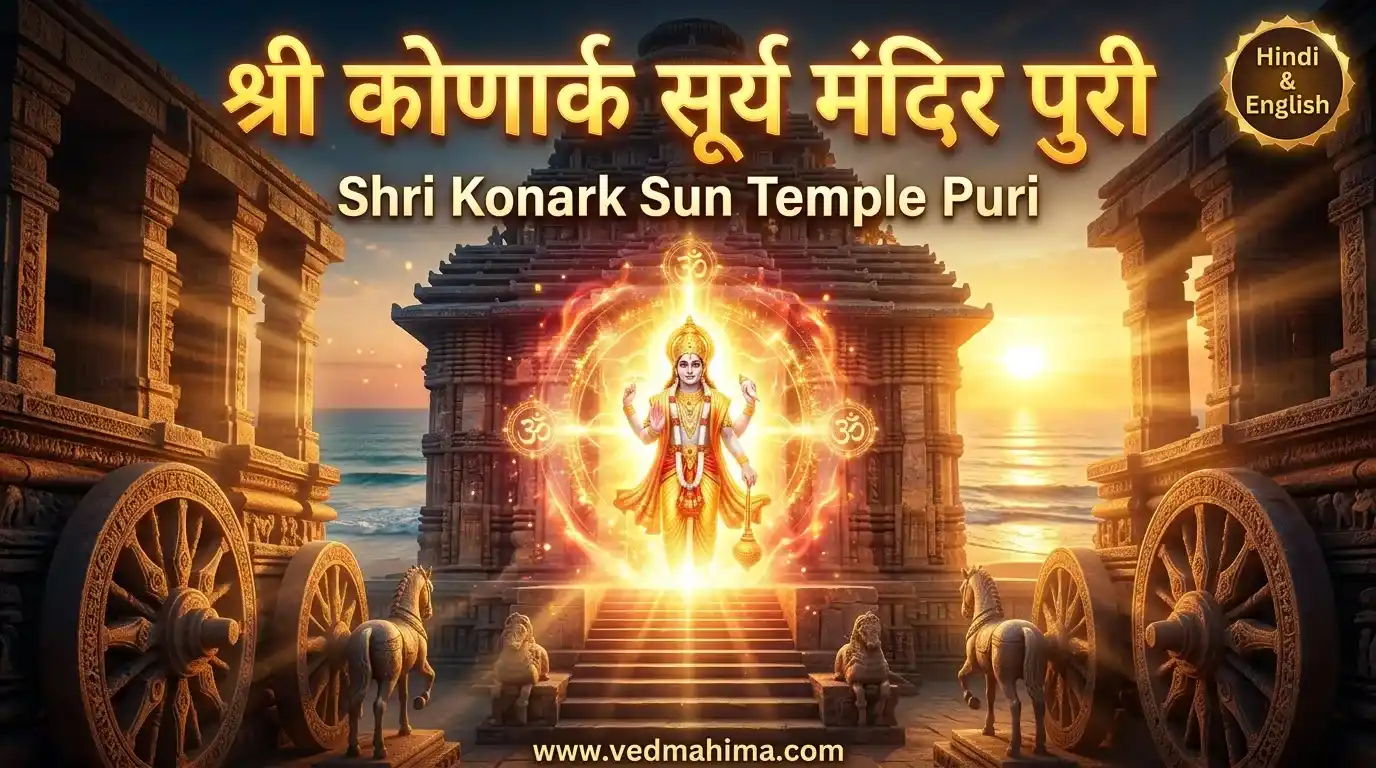
* The Mystical Sun-Dial Wheels: The 24 monumental stone wheels, measuring nearly 10 feet in diameter, are not mere decorative elements; they function as highly accurate sundials. The thickness of the spokes and the shadow cast by the central hub can precisely calculate the exact time of the day down to minutes.
* The Magnetic Legend & The Floating Idol: According to ancient maritime records, the main spire of the temple originally contained a colossal 52-ton lodestone (magnet) at its apex. This massive magnet held the primary iron-rich Chlorite Sun God idol suspended floating in mid-air inside the sanctum, creating a supernatural energetic environment.
* Exquisite Erotic & Royal Sculptures: The exterior walls are permanently etched with thousands of intricate carvings depicting royal court processions, military marches, mythical beasts, musicians, and highly complex, detailed erotic sculptures (Mithuna couples) representing the celebrate cycle of worldly life and creation.
1. Maha Surya Aradhana (06:00 AM): The highly auspicious first morning window where the complex gates swing open to the public. Thousands of devotees and tourists gather to face east and perform direct mental sun worship as the natural golden solar rays illuminate the main stone structures.
2. Pratham Aloka Darshan (08:00 AM - 11:00 AM): The ideal morning phase where the natural daylight highlights the complex alignments of the 24 sundial wheels. Visitors utilize this time to witness the intricate carvings of the Nata Mandira (Dance Hall).
3. Madhyanha Aloka Closure (12:00 PM - 03:00 PM): The intense noon phase where the sun reaches its highest celestial point directly above the temple. Visitors can explore the shaded secondary shrines dedicated to Maya Devi and Chaya Devi within the complex.
4. Sandhya Aloka & Twilight View (05:00 PM - 06:30 PM): The spectacular evening twilight phase accompanied by the shifting shadows across the horse sculptures. The stone surfaces absorb the soft orange glow of the setting sun, providing a deeply peaceful, meditative atmosphere.
5. Grand Laser Light & Sound Show (07:00 PM - 08:30 PM): The historical final night presentation where advanced projection mapping systems throw multi-colored lights onto the grand stone walls, narrating the epic stories of King Narasimhadeva, the 1200 craftsmen, and the legendary sacrifice of Dharmapada.
* Absolute Drone & Heavy Equipment Prohibition: To safeguard the ancient, delicate stone structure from physical vibrations and maintain high archaeological safety, flying drones, using heavy commercial video cameras, or setting up large tripods without prior written permission from the Archaeological Survey of India (ASI) is strictly banned. Handheld mobile phone photography is fully permitted.
* Footwear Regulations: While walking with shoes is permitted across the vast open lawns and outer stone pathways, visitors are required to remove their shoes before climbing the highly sacred stone platforms of the Jagamohana and the Nata Mandira to protect the millennium-old carvings from physical wear.
* Konark Dance Festival: An internationally acclaimed grand cultural extravaganza held annually from December 1st to December 5th against the backdrop of the illuminated Sun Temple. The world's finest classical exponents of Odissi, Bharatanatyam, Kathak, and Kathakali perform under the open starlit sky inside the complex.
* Surya Puja Special Days: Celebrated during the solar transitions and eclipses, where special geometric planetary arrangements attract thousands of spiritual seekers, astrologers, and researchers to study the alignment of the sundials.
* By Train (Detailed Railway Network): The closest major railway hub is Puri Railway Station (PURI), situated just 35 kilometers southwest of Konark. Puri is directly connected via long-distance superfast expresses and high-speed Vande Bharat Express trains from Kolkata, New Delhi, Ahmedabad, and Hyderabad. From Puri, the breathtaking Marine Drive national highway runs directly parallel to the sea coast to Konark, with a continuous 24/7 availability of private taxis, rental bikes, and local buses.
* By Road (Detailed Highway Navigation): Konark is beautifully connected through the coastal Marine Drive and National Highway 316. The Odisha State Road Transport Corporation (OSRTC) and private deluxe travel operators run a seamless fleet of luxury AC Volvo, sleeper, and rapid transit buses from Bhubaneswar, Puri, and Cuttack directly to the Konark central entry circle.
⏰ Best Time
The ideal time to visit the Konark Sun Temple is from October to March. During these winter months, the climate is highly pleasant and comfortable with temperatures ranging between 15°C and 25°C. Since the entire archaeological complex is an open-air stone monument without any overhead shade, the cool weather makes it effortless to walk around the stone platforms, inspect the sundial wheels, and enjoy the evening laser light show. It is best to avoid the scorching summer months (April to June) when temperatures regularly exceed 40°C, heating up the stones intensely.
🛕 Temple Information
Shri Konark Sun Temple Complex, Konark Town, Puri District, Odisha - 752111
Temple Main Gates Daily Operating Hours:
Morning Window (Open): 06:00 AM
Evening Window (Close): 06:30 PM
Authentic Daily Sightseeing & Show Schedule:
Surya Aradhana (Sunrise Phase): 06:00 AM - 07:00 AM
Sundial Study Phase (Morning Light): 08:00 AM - 11:30 AM
Sub-Shrines Exploration (Noon Phase): 12:00 PM - 03:00 PM
Marine Twilight Walk (Sunset Phase): 05:00 PM - 06:30 PM
Evening Illumination & Sound Show: 07:00 PM - 08:30 PM
*Note: The exact timing of the Laser Light show can vary depending on winter/summer sunset timings and weather conditions.
🔗 Related Trending Mandir
About Shri Konark Sun Temple Puri
The profound history of the Konark Sun Temple is deeply intertwined with ancient scriptural legends and the height of the medieval maritime golden era of Odisha. According to the sacred Kapila Samhita and Sambapura Puranas, the history of Arkakshetra (Konark) dates back to the Dwapara Yuga, where Samba, the extraordinarily handsome son of Lord Krishna, was cursed with leprosy. After undergoing twelve intense years of severe penance and continuous solar worship at this very spot, he pleased Surya Dev and was fully cured of his disease. In eternal gratitude, Samba established the first temple here. Millennia later, between 1238 and 1250 AD, the legendary Emperor Langula Narasimhadeva I of the Eastern Ganga Dynasty chose this holy spot to construct a monumental architectural wonder to celebrate his major military victories over foreign invaders. He deployed a massive army of 1,200 finest master craftsmen and architects, headed by the chief sculptor Bisu Maharana. The temple operated as a highly influential center for maritime navigation and astronomical research for centuries. Even when the main spire suffered structural damages during subsequent geopolitical dark ages, the temple stood resilient, standing today as an immortal symbol of global solar consciousness.