Shri Radha Raman Lal Ji Temple Vrindavan
Shree Radha Raman Temple Vrindavan Darshan Guide
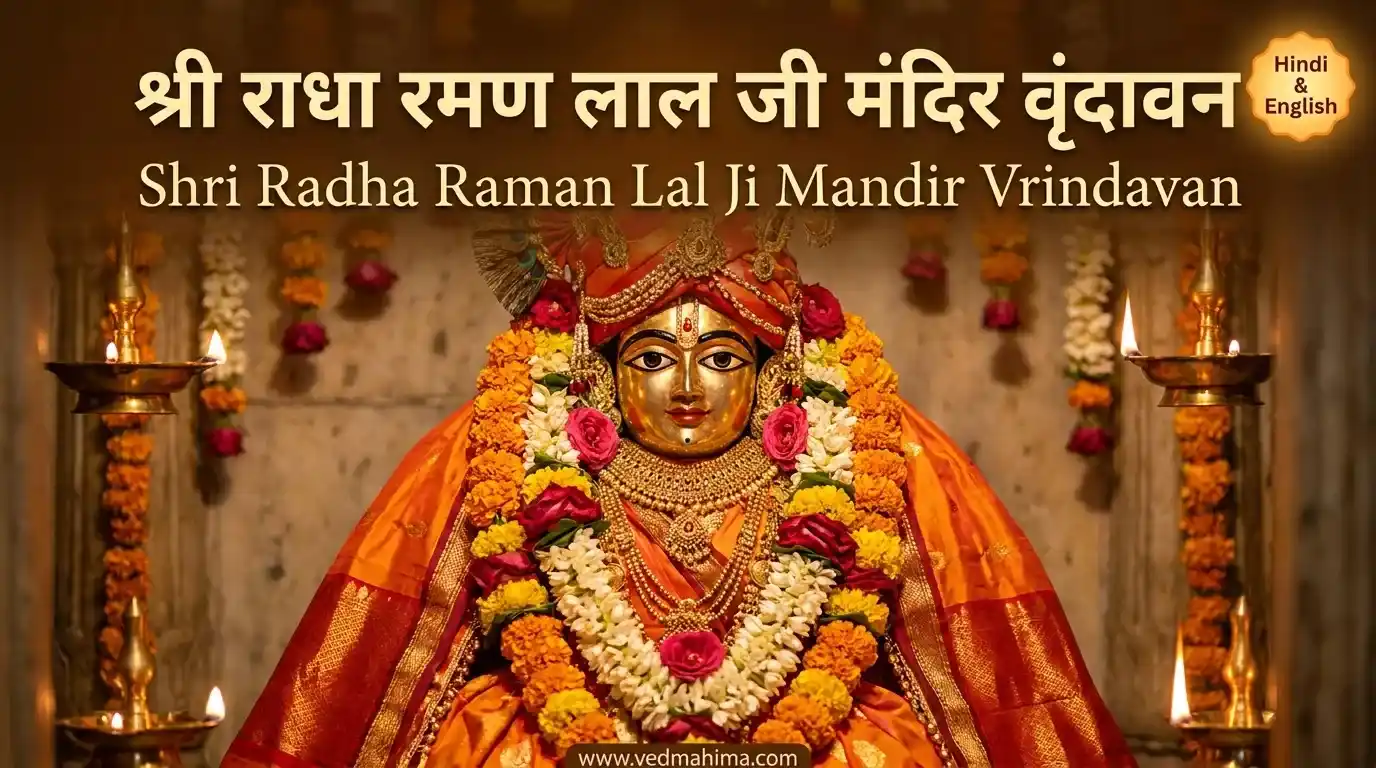
* The Crown of Shri Radha: Similar to the highest traditions of Braj, there is no separate physical idol of Goddess Radha on the altar; instead, a beautifully adorned silver crown and a small seat are placed to the left of Radha Raman Ji to celebrate her eternal presence.
* The 480+ Year Continuous Kitchen Fire: The temple kitchen houses a highly sacred fire ignited by Gopal Bhatta Goswami using Vedic mantras over 480 years ago. This fire has been meticulously kept alive every single second and is exclusively used to prepare the Lord's daily offerings.
* Gopal Bhatta Goswami's Legacy: The temple represents the intense devotion of one of the Six Goswamis of Vrindavan, and his sacred samadhi shrine is situated right inside the temple complex, radiating powerful meditative vibrations.
1. Mangala Aarti (05:00 AM Summer / 05:30 AM Winter): The highly auspicious awakening ritual. The curtains open gently to witness the Lord's primary morning smile amidst the soft chanting of Sanskrit verses.
2. Shringar Darshan (08:30 AM Summer / 09:00 AM Winter): The main morning window where the deity is artistically decorated in finest silks, heavy gold ornaments, and fresh fragrant garlands.
3. Rajbhog Aarti (12:00 PM - 12:30 PM): The grand mid-day feast prepared on the ancient holy fire is offered to the Lord, concluding with heavy brass lamp presentations before afternoon closure.
4. Sandhya Aarti (06:00 PM - 07:30 PM): The breathtaking twilight worship where the entire marble hall glows with oil lamps, and priests perform intricate fire offerings synchronized with traditional bells.
5. Shayan Aarti & Closure (08:30 PM Summer / 08:00 PM Winter): The final musical prayers where a traditional bed is prepared and sweet milk is offered before the doors are securely locked.
* General Entry & Darshan (Cost: FREE / Nil): Entering the main temple courtyard and participating in all daily aartis is entirely free of cost for all walking pilgrims. No VIP tickets are sold.
* Strict Photography Ban: Taking photos or recording videos of the main deity inside the inner sanctum is strictly prohibited to protect the ancient spiritual sanctity of the daily rituals.
* Traditional Dress Code: Devotees are highly encouraged to dress modestly in decent traditional attire. Western outfits like shorts are strongly discouraged within the inner courtyard boundaries.
* Janmashtami & Radhashtami: Celebrated with absolute devotion, featuring grand midnight aartis, extensive flower decorations, and royal clothing shifts for the deity.
* Jhulan Yatra: Held during the monsoon season, where Radha Raman Ji is placed on a massive silver swing and rocked gently amidst ecstatic congregational chanting.
* By Air (Flights): The nearest operational international airport is Indira Gandhi International Airport (DEL) in New Delhi, situated approximately 165 kilometers away. Travelers can comfortably charter private AC taxis via the Yamuna Expressway to reach Vrindavan in under 3 hours.
* By Train (Railways): The nearest high-frequency railway junction is Mathura Junction (MTJ), located roughly 12 kilometers from the temple. Superfast trains from all corners of India stop at Mathura regularly. Local auto-rickshaws, e-rickshaws, and cabs run 24/7 directly to the Vrindavan town limits.
* By Road (Highways): Wide national highways smoothly connect Vrindavan to Delhi, Agra, and Jaipur. Regular state-run regular and sleeper buses operate continuously from Delhi's main bus stations.
⏰ Best Time
The ideal time to visit Radha Raman Temple is from October to March when the weather in Vrindavan is cool and pleasant for exploring the old town lanes. Visiting during the early morning Shringar Darshan or evening Sandhya Aarti hours ensures a deeply serene and ecstatic spiritual experience.
🛕 Temple Information
Shree Radha Raman Lal Ji Temple, Pathpura Street, Near Nidhivan, Vrindavan, Mathura, Uttar Pradesh - 281121
Summer Timings:
Mangala Aarti: 05:00 AM
Shringar Darshan: 08:30 AM - 11:00 AM
Rajbhog Aarti (Closes): 12:00 PM - 12:30 PM
Evening Reopens: 06:00 PM
Sandhya Aarti: 06:30 PM
Shayan Aarti & Closure: 08:30 PM - 09:00 PM
Winter Timings:
Mangala Aarti: 05:30 AM
Shringar Darshan: 09:00 AM - 11:30 AM
Rajbhog Aarti (Closes): 12:00 PM - 12:30 PM
Evening Reopens: 05:30 PM
Sandhya Aarti: 06:00 PM
Shayan Aarti & Closure: 08:00 PM - 08:30 PM
🔗 Related Trending Mandir
About Shri Radha Raman Lal Ji Temple Vrindavan
The glorious history of Shree Radha Raman Lal Ji Temple represents one of the most intellectually and mystically profound chapters in the lineage of Gaudiya Vaishnavism. The sacred origin of this deity traces directly back to the 16th century and is inextricably linked to the intense, pure devotion of Gopala Bhatta Goswami, one of the iconic Six Goswamis sent by Sri Chaitanya Mahaprabhu to reclaim the holy topography of Vrindavan. In the year 1542 AD, Gopala Bhatta Goswami journeyed to the sacred banks of the Gandaki River in Nepal and brought back twelve holy Shaligram Shilas to Vrindavan, which he worshipped daily with unmatched affection. Among these stones was the Damodara Shaligram. Upon witnessing a wealthy merchant donating grand garments, crowns, and jewelry to other deities of Vrindavan, a deep loving desire arose in Gopala Bhatta's heart to serve his Lord in a personal form with limbs, so he could adorn him with clothes and ornaments. On the holy full moon night of Vaishakha Purnima in 1542 AD, Gopala Bhatta Goswami lay down in total surrender after chanting deep structural verses. The next morning, when he opened the basket containing the sacred shilas, he witnessed a breathtaking cosmic miracle: the Damodara Shaligram had spontaneously split open and manifested from within into the exceptionally beautiful, micro-sized form of Lord Krishna, standing in the classic tri-bent (Tribhanga) playing posture. Upon hearing of this supernatural phenomenon, the other great saints of Vrindavan, including Srila Sanatana Goswami and Srila Rupa Goswami, rushed to the site, naming the deity Radha Raman—meaning the one who brings absolute joy to Shri Radha. Because of his self-manifested nature, no architectural change was ever allowed to alter his core stone, and he remains the only ancient deity who never left Vrindavan during the political crises of the Mughal era, as his small form was easily protected inside the groves of old Vrindavan. Architecturally, the grand temple complex standing today was constructed adjacent to the old manifestation site using beautiful light-colored sandstone arches and carved columns. A legendary feature of the temple's history is its kitchen fire, which was ignited by Gopal Bhatta Goswami over 480 years ago using dynamic Vedic Agnihotra mantras. This fire has never been allowed to extinguish and is continuously guarded by hereditary priests to prepare all daily feasts for the Lord. Today, the administrative control and high aesthetic standards of service are strictly preserved by the hereditary Goswami descendants of Gopal Bhatta Goswami's lineage, ensuring that its ancient customs, pure Shaligram energy, and unmatched spiritual heritage remain protected for generations to come.