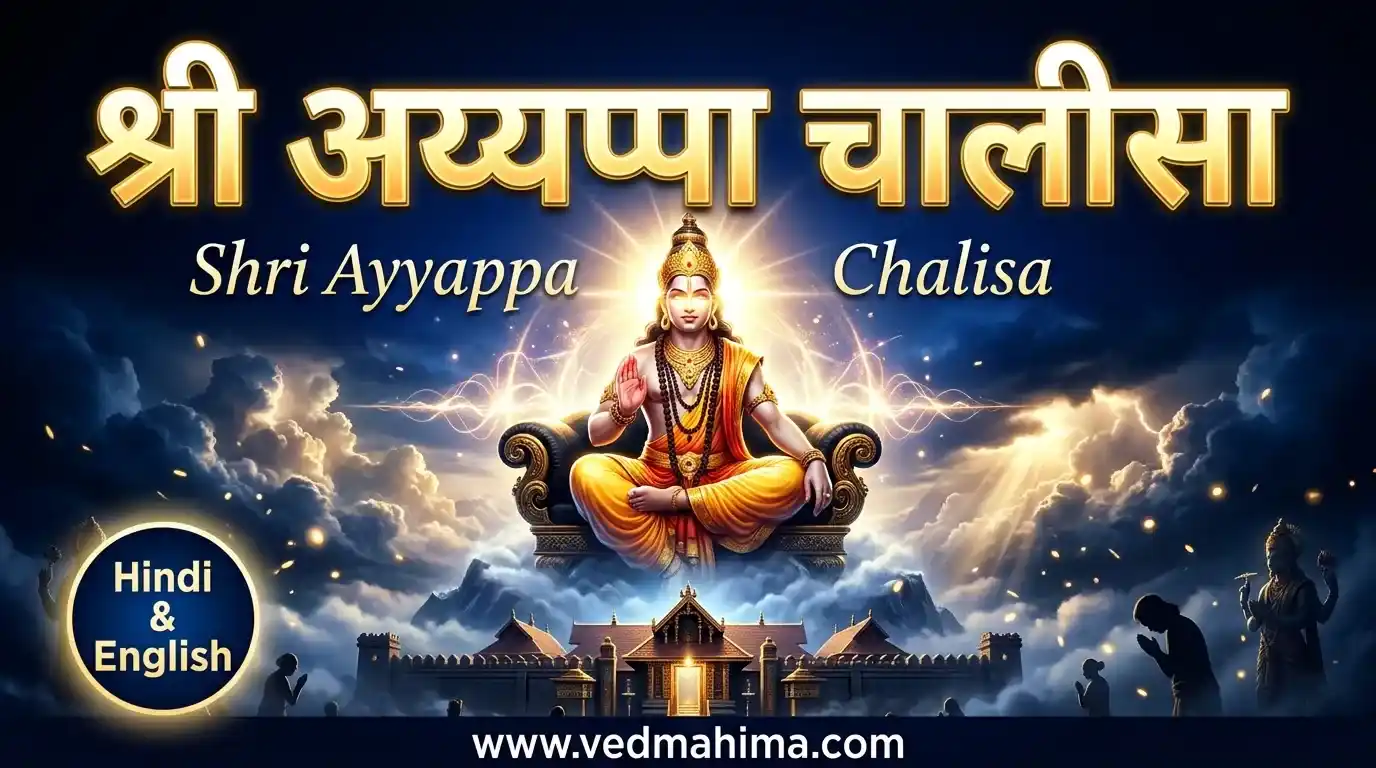
Shri Ayyappa Chalisa
Removal of difficulties, inner purification, celibacy, obstacle removal, spiritual growth
Shri Ganesh Girija Suvan,
Mangal Mool Sujaan.
Kaahun Vidhi Vandan Karun,
Harihar Ayyappa Dhyan.
॥ Chaupai ॥
Jai Ayyappa Jai Ayyappa,
Mangal Murti Manohar.
Kaali Kasht Haro Din Har,
Bhaktan Ke Tum Paalanhaar.
Harihar Putra Kahaave Jag Mein,
Ayyappa Tav Naam.
Keral Bhoomi Shobhit Jahan,
Sabarigiri Dham.
Chir Baal Brahmachari Roopi,
Ayyappa Balwaan.
Karuna Drishti Sada Hi Raakho,
Karu Deenan Par Daan.
Koti Surya Sam Tej Tumhara,
Rakshas Dal Maare.
Tap Bal Se Ayyappa Swami,
Dusht Daman Tum Kare.
Jan Jan Ke Man Mein Jo Hai,
Aas Karen Sab Poori.
Ayyappa Swami Kripa Karo,
Sharan Pade Ab Tumhari.
Saadhan Saatvik Ki Hai Seema,
Jeevan Tav Baani.
Keral Bhoomi Dham Tumhara,
Jag Mein Pooje Gyani.
Jai Ayyappa Jai Ayyappa,
Mangal Murti Manohar.
Bhakton Ke Kasht Haro Prabhu,
Bhavsagar Se Taaro.
Jisne Sumiran Kiya Ayyappa Ka,
Bhakti Bhaav Se.
Dushkar Path Par Chala Wahi,
Sankat Kabhu Na Aave.
Brahmachari Vrat Jo Dhare,
Kare Niyam Ka Paalan.
Teeno Taap Nasave Swami,
Janm Maran Sab Harai.
Chirkaal Se Jo Bhatke,
Maya Jaal Mein Fanse.
Ayyappa Kripa Kare,
Sab Mukt Sahaj Hi Hoye.
Maya Moh Na Aa Sake,
Jo Bhi Bhakt Tumhare.
Ayyappa Kripa Karo,
Bhakti De Anmol.
Ayyappa Swami Jai Jaikaara,
Sabari Giri Dham.
Bhakton Ke Sankat Haro Prabhu,
Dijo Hamein Bhi Dham.
Ant Samay Jab Praan Jaay,
Sharan Tav Hi Aave.
Ayyappa Kripa Karo,
Bhavsagar Se Taaro.
Jai Ayyappa Jai Ayyappa,
Mangal Murti Manohar.
Kaali Kasht Haro Din Har,
Bhaktan Ke Tum Paalanhaar.
॥ Doha ॥
Ayyappa Ke Gun Gao,
Hriday Mein Lao Dhyan.
Bhaktan Ke Sankat Haro,
Harihar Ayyappa Bhagwan.
About Shri Ayyappa Chalisa
Central to the Chalisa is its emphasis on the Brahmachari vow and strict spiritual discipline (niyam), which devotees are called to observe, particularly during the 41-day Mandala period before pilgrimage. It states that those who follow this disciplined path destroy the three kinds of suffering (teeno taap) and ultimately break free from the cycle of birth and death.
The Chalisa also offers hope to those entangled in worldly illusion (maya), promising that devotees who have long wandered lost in its web find easy and natural liberation through Ayyappa''s grace. It describes his radiance as equal to ten million suns, his power to destroy demons and the wicked through the strength of his penance (tap bal), and his role as protector of the humble and distressed.
Regular and sincere recitation of Shri Ayyappa Chalisa is believed to remove obstacles from life, reduce difficulties, and help devotees overcome even the most challenging situations, making life''s difficult paths smoother while fostering spiritual growth and inner peace.
❓ Frequently Asked Questions
Question: Why is Lord Ayyappa called "Harihar Putra"?
Answer: The Chalisa names him the son born of the union of Lord Shiva (Hari) and Lord Vishnu in his Mohini form (Har), making him a unique deity combining the energies of both gods.
Question: What vow is central to Ayyappa worship according to this Chalisa?
Answer: The Chalisa emphasizes the Brahmachari (celibate) vow and strict discipline (niyam), stating that those who follow it destroy the three types of suffering (teeno taap) and break the cycle of birth and death.
Question: Where is Lord Ayyappa''s main shrine located?
Answer: His sacred abode is Sabarigiri Dham (Sabarimala) in Kerala, mentioned repeatedly in the Chalisa as the holy land where he resides and is worshipped by the wise.
Question: What does the Chalisa say about devotees trapped in illusion (maya)?
Answer: It states that those who have long wandered, entangled in maya''s web, find easy liberation (sahaj mukti) through Ayyappa''s grace.
Question: What is the significance of Mandala Pooja mentioned alongside this Chalisa''s worship?
Answer: The 41-day Mandala Pooja period (mid-November to mid-January) is considered the most sacred time for observing vows and intense devotion to Lord Ayyappa before pilgrimage to Sabarimala.
Question: When should the Ayyappa Chalisa be recited?
Answer: It is especially auspicious during the Mandala Pooja period (Kartik-Margashirsha months) and every Saturday, which is believed to reduce Shani Dosha.