Shri Parvati Chalisa
Haritalika Teej, Parvati tapasya story and marriage with Shiva, Monday and Navratri puja, married life and family harmony
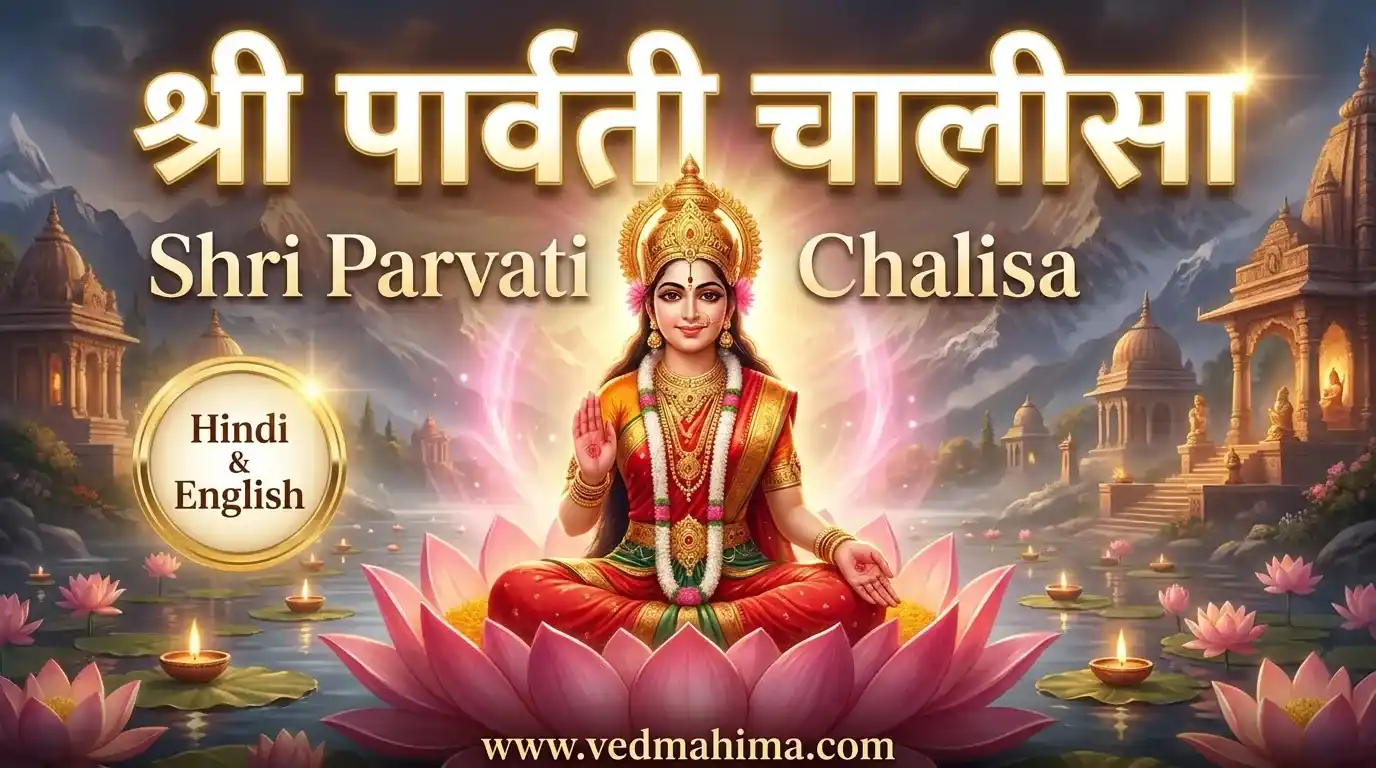
Jai Giri Tanaye Dakshaje,
Shambhu Priye Gunakhaani.
Ganpati Janani Paarvati,
Ambe! Shakti! Bhavaani.
॥ Chaupai ॥
Brahma Bhed Na Tumharo Paave,
Panch Badan Nit Tumko Dhyaave.
Shatmukh Kahi Na Sakta Yash Tero,
Sahasbadan Shram Karat Ghanero.
Teu Paar Na Paavat Maata,
Sthit Raksha Lay Hit Sajata.
Adhar Pravaal Sadrish Arunare,
Ati Kamneey Nayan Kajraare.
Lalit Lalaat Vilepit Keshar,
Kunkum Akshat Shobha Manhar.
Kanak Basan Kanchuki Sajaae,
Kati Mekhla Divya Laharaae.
Kanth Madar Haar Ki Shobha,
Jahi Dekhi Sahajahi Man Lobha.
Baalarun Anant Chhabi Dhaari,
Aabhooshan Ki Shobha Pyaari.
Naana Ratna Jadit Sinhasan,
Taapar Raajati Hari Chaturaanan.
Indraadik Parivaar Poojit,
Jag Mrig Naag Yaksh Rav Koojit.
Gir Kailash Nivaasini Jai Jai,
Kotik Prabha Vikaasini Jai Jai.
Tribhuvan Sakal Kutumb Tihaari,
Anu Anu Mahan Tumhri Ujiyaari.
Hain Mahesh Praanesh! Tumhaare,
Tribhuvan Ke Jo Nit Rakhwaare.
Un So Pati Tum Praapt Keen Jab,
Sukrit Puraatan Udit Bhaye Tab.
Boodho Bail Sawaari Jinki,
Mahima Ka Gaave Kou Tinki.
Sada Shamshaan Bihari Shankar,
Aabhooshan Hain Bhujang Bhayankar.
Kanth Halaahal Ko Chhabi Chhaayi,
Neelkanth Ki Padvi Paayi.
Dev Magan Ke Hit As Keenho,
Vish Lai Aapu Tinahi Aami Deenho.
Taaki Tum Patni Chhavi Dhaarin,
Doorit Vidaarini Mangal Kaarini.
Dekhi Param Saundarya Tihaaro,
Tribhuvan Chakit Banaavan Haaro.
Bhay Bheeta So Maata Ganga,
Lajja May Hai Salil Taranga.
Saut Samaan Shambhu Pah Aayi,
Vishnu Padaabj Chhodi So Dhaayi.
Tehikon Kamal Badan Murjhaayo,
Lakhi Satvar Shiv Sheesh Chadhaayo.
Nityaanand Kari Varadaayini,
Abhay Bhakt Kar Nit Anapaayini.
Akhil Paap Traytaap Nikandini,
Maaheshwari Himaalay Nandini.
Kaashi Puri Sada Man Bhaayi,
Siddh Peeth Tehi Aapu Banaayi.
Bhagwati Pratidin Bhiksha Daatri,
Kripa Pramod Saneh Vidhaatri.
Ripukshay Kaarini Jai Jai Ambe,
Vaacha Siddh Kari Avalambe.
Gauri Uma Shankari Kaali,
Annapoorna Jag Pratipaali.
Sab Jan Ki Ishwari Bhagwati,
Patipraana Parmeshwari Sati.
Tumne Kathin Tapasya Keeni,
Naarad Son Jab Shiksha Leeni.
Ann Na Neer Na Vaayu Ahaara,
Asthi Maatr Tan Bhayau Tumhaara.
Patra Ghaas Ko Khadya Na Bhaayau,
Uma Naam Tab Tumne Paayau.
Tap Biloki Rishi Saat Padhare,
Lage Digaavan Digi Na Haare.
Tab Tav Jai Jai Jai Uchchaareu,
Sapt Rishi Nij Geh Sidhaareu.
Sur Vidhi Vishnu Paas Tab Aaye,
Var Dene Ke Vachan Sunaaye.
Maange Uma Var Pati Tum Tinson,
Chaahat Jag Tribhuvan Nidhi Jinson.
Evamastu Kahi Te Dou Gaye,
Sufal Manorath Tumne Laye.
Kari Vivaah Shiv Son He Bhama,
Punah Kahaai Har Ki Baama.
Jo Padhihai Jan Yah Chalisa,
Dhan Jan Sukh Deihai Tehi Isa.
॥ Doha ॥
Koot Chandrika Subhag Shir,
Jayati Jayati Sukh Khaani.
Paarvati Nij Bhakt Hit,
Rahahu Sada Varadaani.
About Shri Parvati Chalisa
The first verses praise her. They say even Brahma cannot know her secret, the five-faced Shiva and the six-faced Kartikeya cannot finish her praise, and Shesha with a thousand mouths tires in the effort. They describe her coral-red lips, dark-lined eyes, forehead anointed with saffron and kumkum, golden garments, and a jewelled throne on which Vishnu and Brahma sit. She lives on Kailash, and the whole creation is her family.
The Chalisa then describes Shiva, whom she won as her husband: an old bull as his mount, a dweller at the cremation ground, adorned with fearsome serpents, whose throat shone with halahal poison, making him Neelkanth. It says Shiva took the poison for the sake of the gods (see the Shiv Chalisa). A well-known episode follows: Mother Ganga, shy and afraid, left Vishnu''s feet and came to Shambhu like a co-wife, and when Parvati''s lotus face wilted, Shiva quickly placed Ganga on his head (see the Ganga Chalisa).
The central story is her tapasya. The Chalisa says that after taking guidance from Narada she did severe austerities without food, water or air until only her bones remained, and gave up even leaves, which gave her the name Uma. The Saptarishis came to test her resolve, could not shake it, and praised her and left. Then Brahma, Vishnu and the gods came with a boon, she asked for Shiva as her husband, they said "Evamastu," and her wish was fulfilled. She married Shiva and was known again as Har ki Baama, the left half of Shiva.
The hymn also names her as Gauri, Uma, Shankari, Kali and Annapurna, the one who feeds the world, and says Kashi is dear to her and that she made it a siddha peeth and gives food every day (see the Durga Chalisa). Its closing line promises wealth, family and happiness to the one who recites it. Devotees recite it on Mondays, Haritalika Teej and Navratri for peace in the family and a happy married life. These are matters of faith, to be taken alongside patience, honest communication and mutual respect.
❓ Frequently Asked Questions
Question: Who is Goddess Parvati, and what names does the Chalisa give her?
Answer: The Chalisa calls her Giri Tanaya (daughter of the mountain), Dakshaja, Shambhu Priya and Ganpati Janani (mother of Ganesha, see the Ganesh Chalisa). It also calls her Gauri, Uma, Shankari, Kali, Annapurna, Maheshwari and Himalaya Nandini, and says even Brahma cannot know her secret.
Question: What is the story of Parvati''s tapasya?
Answer: The Chalisa says she did hard tapasya after taking guidance from Narada. She lived without food, water or air until only her bones remained, and then gave up even leaves, which is how she got the name Uma. The Saptarishis came to test her and failed to shake her, and then praised her and left.
Question: How was the wish for marriage with Shiva granted?
Answer: The gods, with Brahma and Vishnu, came and offered a boon. She asked for Shiva as her husband, they said "Evamastu" (so be it), and her wish was fulfilled. She married Shiva and was known again as Har ki Baama, the left half of Shiva (see the Shiv Chalisa).
Question: How does the Chalisa describe Shiva as her husband?
Answer: It describes him riding an old bull, living at the cremation ground, adorned with fearsome serpents, and as the one whose throat shone with halahal, which made him Neelkanth. It says Shiva took the poison for the good of the gods, and that Parvati, as his wife, removes sin and brings welfare.
Question: What is the story of Ganga in this Chalisa?
Answer: It says Mother Ganga, afraid and shy, left Vishnu''s feet and came to Shambhu like a co-wife. Seeing Parvati''s lotus face wilt, Shiva quickly placed Ganga on his head. This is how the Chalisa explains why Ganga rests in Shiva''s locks (see the Ganga Chalisa).
Question: When should the Parvati Chalisa be recited, and is it linked to marriage?
Answer: Mondays, Haritalika Teej (Bhadrapada Shukla Tritiya) and Navratri are the favourite days. Unmarried women pray to Parvati for a good life partner, and married couples for harmony at home. These are matters of faith and are best taken along with patience, communication and mutual respect.


