Shri Ganga Chalisa
Ganga Dussehra, Bhagirath tapasya and Ganga avtaran story, Prabhavati Mandakini Jahnavi, Ganga snan and paath vidhi, sin removal and moksha
Jai Jai Jai Jag Paavani,
Jaiati Devasari Gang.
Jai Shiv Jata Nivaasini,
Anupam Tung Tarang.
॥ Chaupai ॥
Jai Jag Janani Haran Agh Khaani,
Aanand Karani Gang Maharaani.
Jai Bhaagirathi Surasari Maata,
Kalimal Mool Dalani Vikhyaata.
Jai Jai Jai Hanu Suta Agh Anani,
Bheeshm Ki Maata Jag Janani.
Dhaval Kamal Dal Mam Tanu Saaje,
Lakhi Shat Sharad Chandra Chhavi Laaje.
Vaahan Makar Vimal Shuchi Sohai,
Amiy Kalash Kar Lakhi Man Mohai.
Jadit Ratna Kanchan Aabhooshan,
Hiy Mani Haar Haranitam Dooshan.
Jag Paavani Tray Taap Nasaavani,
Taral Tarang Tung Man Bhaavani.
Jo Ganapati Ati Poojya Pradhaana,
Tihun Te Pratham Gang Asnaana.
Brahm Kamandal Vaasini Devi,
Shri Prabhu Pad Pankaj Sukh Sevi.
Saathi Sahastra Sagar Sut Taarayo,
Ganga Sagar Teerath Dhaarayo.
Agam Tarang Uthayo Man Bhaavan,
Lakhi Teerath Haridwaar Suhaavan.
Teerath Raaj Prayaag Akshaivat,
Dharayau Maatu Puni Kaashi Karvat.
Dhani Dhani Surasari Swarg Ki Seedhi,
Taarani Amit Pitru Pad Peedhi.
Bhaagirath Tap Kiyo Apaara,
Diyo Brahm Tab Surasari Dhaara.
Jab Jag Janani Chalyo Laharaai,
Shambhu Jata Mahan Rahyo Samaai.
Varsh Paryant Gang Maharaani,
Rahin Shambhu Ke Jata Bhulaani.
Muni Bhaagirath Shambhuhin Dhyaayo,
Tab Ik Boond Jata Se Paayo.
Taate Maatu Bhai Tray Dhaara,
Mrityu Lok Nabh Aru Paataara.
Gai Paataal Prabhaavati Naama,
Mandaakini Gai Gagan Lalaama.
Mrityu Lok Jaahnavi Suhaavani,
Kalimal Harani Agam Jag Paavani.
Dhani Maiya Tav Mahima Bhaari,
Dharm Dhuri Kali Kalush Kuthaari.
Maatu Prabhaavati Dhani Mandaakini,
Dhani Surasarit Sakal Bhayanashini.
Paan Karat Nirmal Gangajal,
Paavat Man Ichchhit Anant Phal.
Poorab Janm Punya Jab Jaagat,
Tabahin Dhyaan Ganga Mahan Laagat.
Jai Pagu Surasari Hetu Uthaavahin,
Tai Jagi Ashwamedh Phal Paavahin.
Maha Patit Jin Kaahu Na Taare,
Tin Taare Ik Naam Tihaare.
Shat Yojanahu Se Jo Dhyaavahin,
Nishchay Vishnu Lok Pad Paavahin.
Naam Bhajat Aganit Agh Naashai,
Vimal Gyaan Bal Buddhi Prakaashai.
Jimi Dhan Mool Dharm Aru Daana,
Dharm Mool Gangajal Paana.
Tav Gun Gunan Karat Dukh Bhaajat,
Grih Grih Sampatti Sumati Viraajat.
Gangahin Nem Sahit Nit Dhyaavat,
Durjanahun Sajjan Pad Paavat.
Buddhiheen Vidya Bal Paavai,
Rogi Rog Mukt Hvai Jaavai.
Ganga Ganga Jo Nar Kahahin,
Bhookhe Nange Kabahun Na Rahahin.
Nikasat Hi Mukh Ganga Maai,
Shravan Daabi Yam Chalahin Paraai.
Mahaan Adhin Adhaman Kahan Taaren,
Bhae Narak Ke Band Kivaare.
Jo Nar Japai Gang Shat Naama,
Sakal Siddh Pooran Hvai Kaama.
Sab Sukh Bhog Param Pad Paavahin,
Aavaagaman Rahit Hvai Jaavahin.
Dhani Maiya Surasari Sukhadaini,
Dhani Dhani Teerath Raaj Triveni.
Kakara Graam Rishi Durvaasa,
Sundardaas Ganga Kar Daasa.
Jo Yah Padhai Ganga Chalisa,
Milai Bhakti Aviral Vaageesa.
॥ Doha ॥
Nit Nav Sukh Sampatti Lahain,
Dharain Gang Ka Dhyaan.
Ant Samay Surpur Basai,
Saadar Baithi Vimaan.
Samvat Bhuj Nabh Dishi,
Ram Janm Din Chaitra.
Poorn Chalisa Kiyo,
Hari Bhaktan Hit Naitra.
About Shri Ganga Chalisa
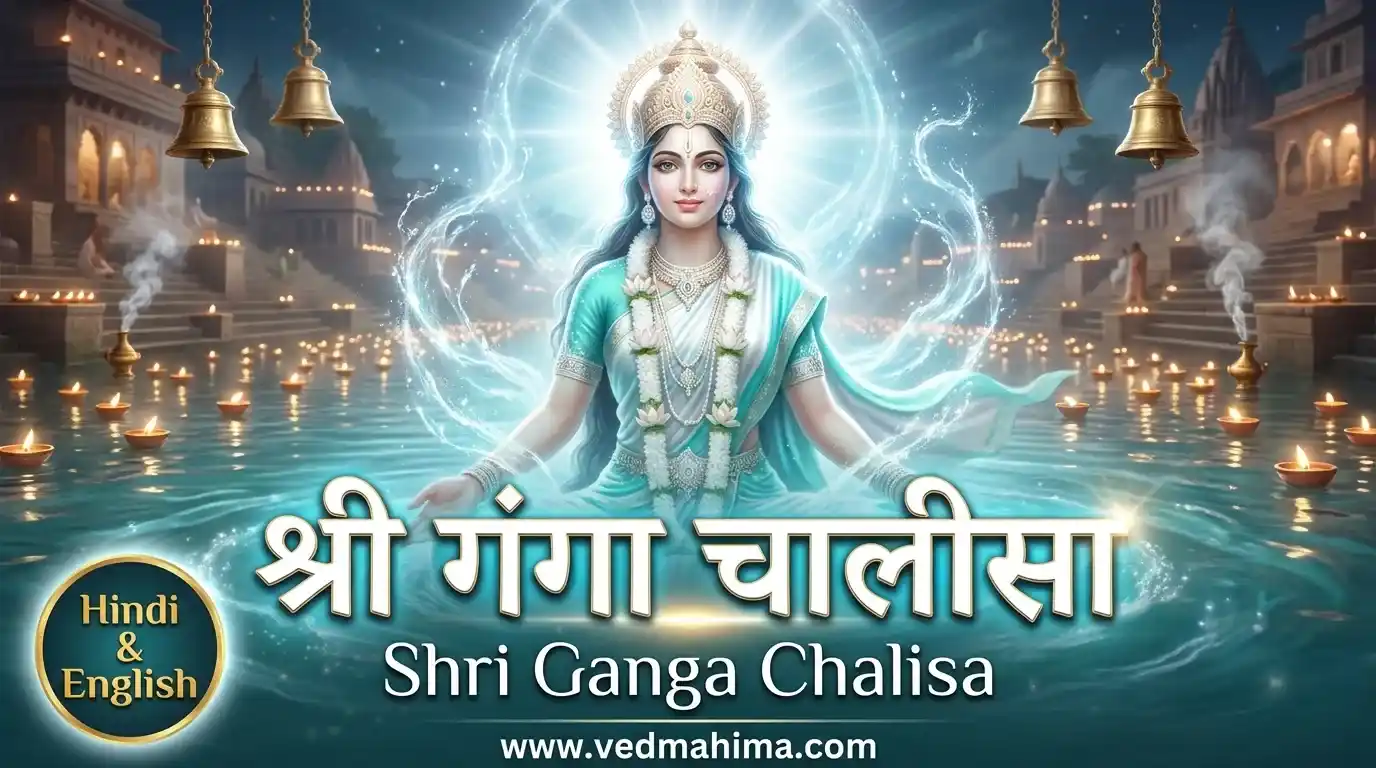
The first verses praise her as the mother of the world, who removes sin, brings joy and destroys the faults of Kali Yuga. She is called Bhagirathi, Surasari, Bheeshm''s mother and the daughter of Jahnu (Jahnu Suta). Her form is described as seated on a white lotus, brighter than a hundred autumn moons, riding a makara, with a pot of nectar in her hand and jewelled ornaments.
The central story is her descent. The Chalisa says King Bhagirath performed great tapasya, and Brahma gave the stream of Surasari. When Ganga set out in great waves, she was held in Shambhu''s matted locks for a whole year (see the Shiv Chalisa). Bhagirath then meditated on Shiva, and Ganga received a single drop from his hair. From this she became three streams: Prabhavati to the netherworld, Mandakini to the sky, and Jahnavi, who stayed in the mortal world and removes the faults of Kali Yuga. The Chalisa says she liberated the sixty thousand sons of King Sagar and countless forefathers, and names Ganga Sagar, Haridwar, Prayag with the Akshaya Vat and Triveni, and Kashi as the places where she is honoured.
The second half lists what devotion to Ganga brings. It says that even the great sinner whom no one else saved is saved by her name, that one who meditates on her from a hundred yojanas away attains Vishnu''s realm, that drinking her pure water brings wished-for fruit, and that one who says "Ganga, Ganga" never lacks food or clothes. The Chalisa also praises her over Ganapati, saying that her bath is first even before the one who is worshipped first (see the Ganesh Chalisa), and recommends reciting her hundred names for the fulfilment of wishes and freedom from the cycle of birth.
The closing verses say that one who recites it gains devotion and the grace of Vagisha (the lord of speech), and the last doha says it was completed on Ram Navami in Chaitra (see the Ram Chalisa). These are matters of faith. Devotees recite it on Ganga Dussehra, Kartik Purnima and Makar Sankranti for peace and spiritual merit, and respect for Ganga is best shown by keeping her banks and water clean.
❓ Frequently Asked Questions
Question: Who composed the Ganga Chalisa?
Answer: The closing verses give the poet''s name as Sundardas and say he lived in Kakra village, in the ashram of Rishi Durvasa, as a servant of Ganga. The last doha adds that the Chalisa was completed on Ram Navami in Chaitra, for the benefit of devotees of Hari (see the Ram Chalisa).
Question: How did Ganga come down to Earth, according to the Chalisa?
Answer: It says King Bhagirath did great tapasya and Brahma gave the stream of Surasari (Ganga). When Ganga set out in great waves, she was held in Shambhu''s matted locks for a year. Bhagirath then meditated on Shiva, and Ganga received a single drop from his hair (see the Shiv Chalisa).
Question: What are the three streams of Ganga named in the Chalisa?
Answer: The Chalisa says the one stream became three: Prabhavati went to the netherworld (Patal), Mandakini to the sky, and Jahnavi stayed in the mortal world, removing the faults of Kali Yuga. It also calls her Bhagirathi, Surasari, Bheeshm''s mother and the daughter of Jahnu (Jahnu Suta).
Question: Whom did Ganga liberate, and which holy places are named?
Answer: It says she liberated the sixty thousand sons of King Sagar and countless ancestors, and names Ganga Sagar, Haridwar, Prayag (with the Akshaya Vat and Triveni) and Kashi, the stairway to heaven for forefathers.
Question: What does the line about Ganapati and Ganga mean?
Answer: The Chalisa says that though Ganapati is the foremost deity to be worshipped, the bath in Ganga comes even before him (see the Ganesh Chalisa). It also praises the one who says "Ganga, Ganga", promising he will never lack food or clothes, and recommends reciting her hundred names.
Question: When and how should the Ganga Chalisa be recited?
Answer: Early morning, ideally after a bath, facing Ganga or with Gangajal at home, and on Ganga Dussehra, Kartik Purnima and Makar Sankranti. Devotees also respect Ganga by keeping her banks and water clean.


