Shri Tulsi Chalisa
Tulsi Maharani Vishnupriya, Kartik maas puja, Dev Uthani Ekadashi and Tulsi Vivah, Tulsi pujan vidhi, peace and purity at home
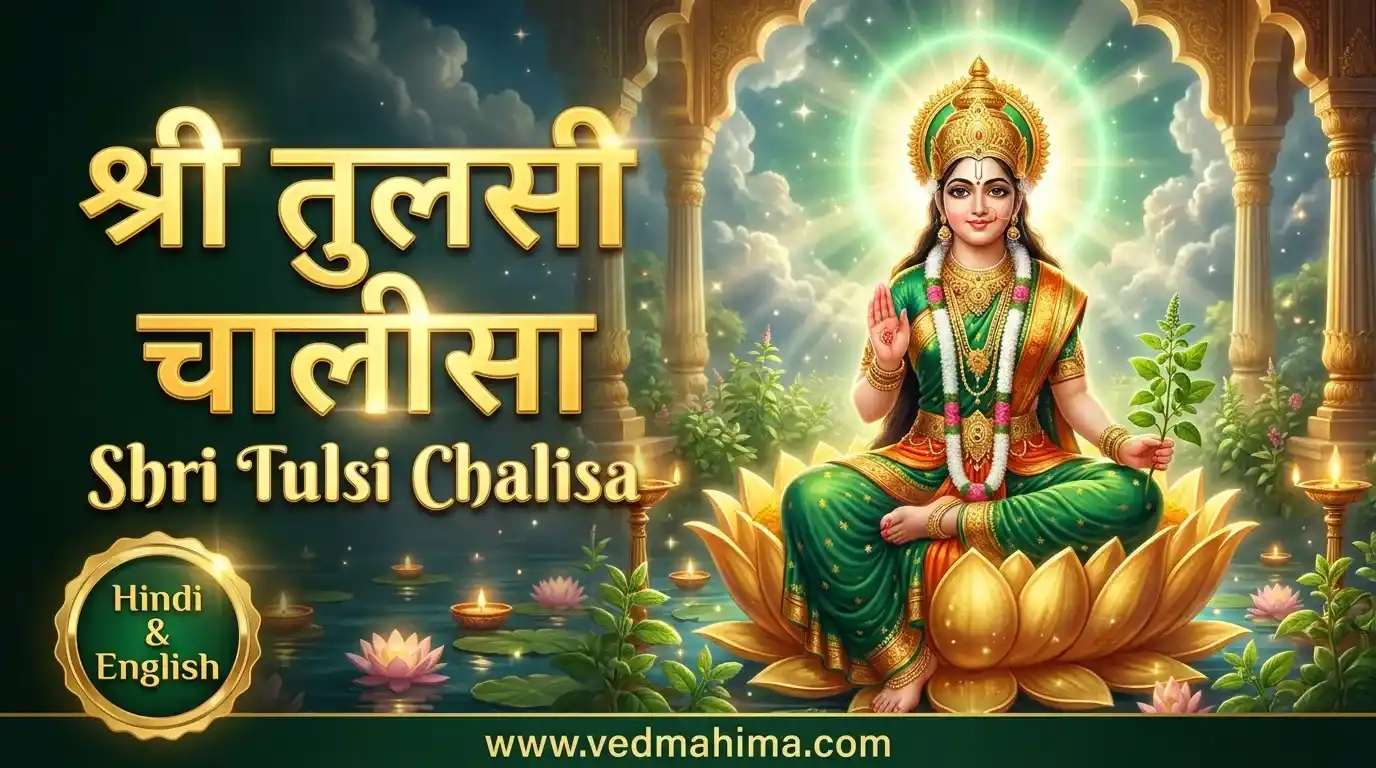
Shri Tulsi Maharani,
karun vinay sirnay.
Jo mam ho sankat vikat,
deejai maat nashay.
॥ Chaupai ॥
Namo namo Tulsi Maharani,
Mahima amit na jaay bakhani.
Diyo Vishnu tumko sanmana,
Jag mein chaayo suyash mahana.
Vishnupriya jai jayati Bhavani,
Tihun lok ki ho sukhkhani.
Bhagwat pooja kare jo koi,
Bina tumhare safal na hoi.
Jin ghar tav nahin hoy nivasa,
Us par karahin Vishnu nahin basa.
Kare sada jo tav nit sumiran,
Tehike kaaj hoy sab pooran.
Kartik maas mahatm tumhara,
Taako jaanat sab sansara.
Tav poojan jo karain kunwari,
Paavai sundar var sukumari.
Karai jo pooja nitprati nari,
Sukh sampatti se hoy sukhari.
Vriddha nari karai jo poojan,
Mile bhakti hovai pulkit man.
Shraddha se poojai jo koi,
Bhavnidhi se tar jaavai soi.
Katha Bhagwat yagya karavai,
Tum bin nahin safalta paavai.
Chaayo tab pratap jagbhari,
Dhyavat tumhin sakal chitdhari.
Tumhin maat yantran tantron mein,
Sakal kaaj sidhi hovai kshan mein.
Aushadhi roop aap ho mata,
Sab jag mein tav yash vikhyata.
Dev rishi muni au tapdhari,
Karat sada tav jai jaykari.
Ved puranan tav yash gaya,
Mahima agam paar nahin paya.
Namo namo jai jai sukhkarini,
Namo namo jai dukhniwarini.
Namo namo sukhsampati deni,
Namo namo agh kaatan chheni.
Namo namo bhaktan dukh harni,
Namo namo dushtan mad charni.
Namo namo bhav paar utarni,
Namo namo parlok sudharni.
Namo namo nij bhakt ubarni,
Namo namo jankaj sanwarni.
Namo namo jai kumati nashavni,
Namo namo jai sumati badhavani.
Namo namo nij jan apanavni,
Namo namo sab sukh upjavni.
Jayati jayati jai Tulsi maai,
Dhyau tumko sheesh navai.
Nijjan jaani mohi apnao,
Bigde kaaraj aap banao.
Karun vinay main maat tumhari,
Pooran aasha karahu hamari.
Sharan charan kar jori manaun,
Nishdin tere hi gun gaaun.
Krahu maat ab mopar daya,
Nirmal hoy sakal mam kaya.
Mangu maat yah var deejai,
Sakal manorath poorn keejai.
Jaanun nahin kuch nem achara,
Chhamahu maat aparadh hamara.
Barah maas karai jo pooja,
Ta sam jag mein aur na duja.
Prathmahi Gangajal mangvaave,
Phir sundar snan karave.
Chandan akshat pushp chadhave,
Dhoop deep naivedya lagave.
Kare aachman Ganga jal se,
Dhyan kare nirmal hriday se.
Paath kare phir Chaalisa ki,
Astuti kare maat Tulsi ki.
Yahi vidhi pooja kare hamesha,
Taake tan nahin rahai klesha.
Karai maas Kartik ka sadhan,
Sove nit pavitra mahi aasan.
Karai kaamna jo man maahin,
So sab nishchay siddh hoi jaahin.
Hai yah katha maha sukhdaai,
Padhe sune so bhav tar jaai.
॥ Doha ॥
Yah Shri Tulsi Chaalisa,
paath kare jo koy.
Govind so phal paavahi,
jo man ichha hoy.
About Shri Tulsi Chalisa
The opening doha bows to Tulsi Maharani and asks her to remove troubles. The first verses say that Vishnu gave her honour and that her fame spread across the world (see the Vishnu Chalisa). It calls her Vishnupriya, a source of happiness in the three worlds, and says no worship of Bhagwan is successful without her, and that Vishnu does not dwell in a house where she does not live. The Puranic tradition tells of Vrinda, the devoted wife whose story is linked with the origin of Tulsi, and of her marriage with Shaligram, the form of Vishnu. This tradition is not told in the Chalisa itself.
The Chalisa then names the greatness of the month of Kartik, which the whole world knows. In this month, on Dev Uthani Ekadashi, Tulsi Vivah is celebrated in many homes. The verses say that an unmarried girl who worships Tulsi gets a good groom, that a woman who worships her daily is happy in wealth and comfort, that an old woman finds devotion and joy, and that one who worships with faith crosses the ocean of worldly life. It adds that a Bhagwat katha or yagya is not successful without her, that she is present in yantra and tantra, and that she is of the form of a medicinal herb (aushadhi roop). Tulsi is well known in Ayurveda, but this is a devotional text and illness should be treated with a doctor''s advice.
A long run of verses begins with "Namo namo," saluting her as the giver of happiness, the remover of sorrow, the giver of wealth, the cutter of sin (agh), the remover of her devotees'' pain, the one who humbles the proud, the one who carries across the world, who improves the next world and who increases good thinking while ending bad thinking. The devotee then prays humbly: he does not know the rules of worship and asks forgiveness, asks that his body be made pure and that his wishes be fulfilled.
The last part gives the vidhi. One who worships for twelve months has no equal. First bring Gangajal and bathe the plant with it (see the Ganga Chalisa), then offer sandalwood, akshat, flowers, incense, a lamp and naivedya, take achaman with Gangajal, meditate with a pure heart, recite the Chalisa and offer a stuti. One who does this daily has no trouble in the body. The Chalisa also advises keeping the Kartik sadhana and sleeping on a clean floor, and says that every wish held in the mind is sure to be fulfilled. The closing doha says that one who recites it gains from Govind the fruit of his heart''s wish (see the Lakshmi Chalisa, since Tulsi is also linked with Lakshmi in tradition). These are matters of faith, to be taken alongside effort.
❓ Frequently Asked Questions
Question: Why is Tulsi called Vishnupriya?
Answer: The Chalisa says that Lord Vishnu gave her honour and that her fame spread across the world. It calls her Vishnupriya, the beloved of Vishnu, and says no worship of Bhagwan is complete without her (see the Vishnu Chalisa).
Question: What does the Chalisa say about a house without Tulsi?
Answer: It says that in the house where Tulsi does not live, Vishnu does not dwell. It also says that a Bhagwat katha or yagya is not successful without her. This is why a Tulsi plant stands in the courtyard of many Hindu homes.
Question: Why is Kartik month important for Tulsi worship?
Answer: The Chalisa names the greatness of the month of Kartik, which the whole world knows. It advises keeping the Kartik sadhana and sleeping on a clean floor. On Dev Uthani Ekadashi of this month, Tulsi Vivah, the ceremonial marriage of Tulsi with Shaligram or Vishnu, is performed in many homes.
Question: What is the correct Tulsi puja vidhi according to the Chalisa?
Answer: It says to bring Gangajal first and bathe the plant with it, then offer sandalwood, akshat, flowers, incense, a lamp and naivedya. After that, take achaman with Gangajal, meditate with a pure heart, recite the Chalisa and offer a stuti to Mother Tulsi (see the Ganga Chalisa).
Question: What does the Chalisa say about unmarried girls and women?
Answer: It says that an unmarried girl who worships Tulsi receives a good groom, a woman who worships daily is happy in wealth and comfort, and an elderly woman finds devotion and joy. These are matters of faith and are best taken with patience.
Question: How does the Chalisa describe Tulsi as a medicine and a protector?
Answer: It calls her aushadhi roop (of the form of a medicinal herb) and says her name is famous in the world, and that she is present in yantra and tantra. Tulsi is a well-known herb in Ayurveda, but the Chalisa is a devotional text, and illness should be treated with a doctor''s advice.


