Shri Govardhan Parvat Mathura
Shri Govardhan Parvat Parikrama & Temple Guide
🙏 Devotional
🔥 Powerful
📿 Daily Prayer
॥ Temple Overview & Divine Glory ॥
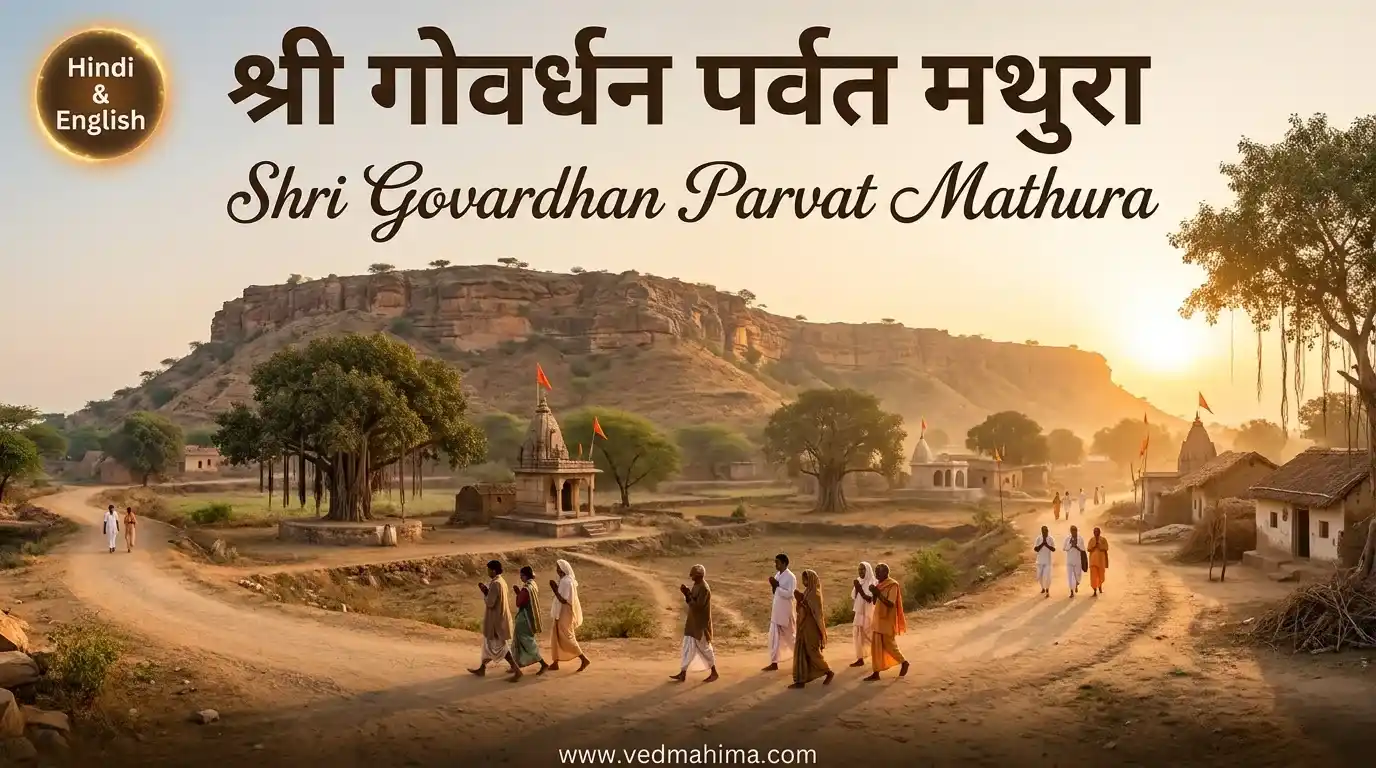
Shri Govardhan Parvat, also known as Giriraj Ji, stands as the most vital, ecologically profound, and mythologically monumental natural shrine within the sacred topography of Sanatan Dharma. Situated in the Mathura district of Uttar Pradesh, India, this holy hill is not worshipped merely as a landform, but as a direct, living physical manifestation of Lord Krishna himself. According to scriptural texts, during the Dwapara Yuga, Lord Krishna convinced the residents of Braj to stop their traditional sacrifices to Indra (the rain god) and instead worship the Govardhan Hill, which sustained their cattle and forests. Enraged, Indra unleashed devastating, continuous torrential rains to submerge the region. To protect his devotees, seven-year-old Krishna effortlessly lifted the massive Govardhan hill on the pinky finger of his left hand for seven consecutive days and nights, shattering Indra's cosmic pride. Governed deeply by the traditions of the Pushtimarg and Gaudiya sampradayas, Govardhan is the ultimate epicenter of the world-famous 21-kilometer barefoot Parikrama (circumambulation). A deeply rooted spiritual belief dictates that walking around Giriraj Ji clears the soul of past karmic burdens, infuses the mind with unconditional divine love, and guarantees the eternal protective shelter of Lord Giridhari.॥ Key Spiritual & Structural Aspects ॥
* The Living Shila (Rock) Worship: Unlike traditional temples housing sculpted marble idols, the central focal point of deep devotion here is the sacred Giriraj Shilas (natural sandstone rocks). Devotees offer pure cow milk, tulsi leaves, and aromatic sweets directly to these living stones at various Mukharwind shrines.* The Holy Radha Kund & Shyam Kund: Located along the northern stretch of the parikrama route, these twin sacred lakes are considered the ultimate aquatic embodiments of Radha and Krishna's divine love. Taking a holy dip here, especially at midnight on Ahoi Ashtami, is believed to grant pure, unalloyed devotion.
* The Magnificent Mansi Ganga: Sitting right in the central heart of Govardhan township, this massive historic lake was manifested purely by Lord Krishna's mind (Manas) to reassure his parents. Pilgrims traditionally start and finish their spiritual parikrama by performing an aarti here.
* The Historic Danghati Mukharwind: This serves as the primary starting terminal for the parikrama. The temple houses a prominent rock deity beautifully decorated in royal robes, crowns, and large silver eyes, representing the exact spot where Krishna stood while holding the hill aloft.
॥ The Detailed Divine Ritual & Parikrama Cycle ॥
The daily spiritual timeline of Govardhan centers around the continuous 21-kilometer circumambulation path and the ashtyam (eight-fold) service rituals at major shrines like Danghati and Jatipura:1. Mangala Aarti & Milk Abhishek (05:00 AM - 06:00 AM): The morning awakening ceremony. Millions of pilgrims and local ascetics begin their day by pouring pure, fresh cow milk over the sacred Mukharwind stones, accompanied by loud chants of Giriraj Maharaj Ki Jai.
2. Rajbhog Aarti & Chhappan Bhog (11:30 AM - 12:30 PM): The grand midday royal feast. A massive assortment of traditional Braj sweets, pure ghee delicacies, and locally prepared milk items are offered to the deity, followed by a brief afternoon closure of the inner altars for rest.
3. Sandhya Maha-Aarti (06:30 PM - 07:30 PM): The spectacular evening twilight assembly. The major temples overlooking the parikrama path light up brilliantly, featuring the synchronized waving of massive multi-tiered brass oil lamps, filling the air with absolute mystical energy.
4. Shayan Aarti & Deep Daan (08:30 PM - 09:00 PM): The final night closure. Soothing devotional verses are sung to bring the Lord to celestial rest. Devotees float thousands of traditional oil lamps (diyas) in Mansi Ganga and Radha Kund before the primary temple gates close.
॥ Architectural Landscape & Parikrama Layout ॥
The Govardhan Parikrama is an exceptionally managed 21-kilometer spiritual track divided into two primary segments: the 12-km Bada Parikrama (covering Govardhan to Anyor and Jatipura) and the 9-km Chhota Parikrama (covering Radha Kund area). The path is completely lined with specialized soft sand corridors for barefoot walkers, alongside a paved track for eco-friendly e-rickshaws. The entire mountain landscape, though naturally diminished over centuries due to a scriptural curse by Sage Pulastya, is protected as a high-priority heritage zone. Beautiful sandstone pavilions, step-wells (baolis), and modern resting zones have been constructed by the administration to manage the massive influx of millions of walking pilgrims.॥ Major Festivals Celebrated ॥
* Govardhan Puja & Annakut Mahotsav: Celebrated with absolute, unparalleled grandeur on the day immediately following Diwali. Shrines like Jatipura and Danghati construct massive mountains of traditional vegetarian food, sweets, and rice (Annakut), drawing millions of international travelers.* Guru Purnima (Mudaia Mela): The largest annual congregation where over 5 to 7 million devotees converge simultaneously to complete the 21-kilometer parikrama within a span of five days, transforming the entire township into a sea of human devotion.
॥ How to Reach Shri Govardhan Parvat Mathura ॥
Govardhan is smoothly integrated into the primary transit networks of Uttar Pradesh and the National Capital Region via advanced highways and rail lines:* By Air (Flights): The closest international airport anchor is the Indira Gandhi International Airport (DEL) in New Delhi, situated roughly 160 kilometers away, connecting smoothly via National Highway 19 or the multi-lane Yamuna Expressway. The upcoming Noida International Airport at Jewar will provide an even closer gateway. High-grade prepaid rental taxis run round-the-clock from the arrival terminals.
* By Train (Railways): The primary major railway junction is Mathura Junction (MTJ), located 26 kilometers away, operating high-speed Vande Bharat and Shatabdi express lines. Additionally, Govardhan has a local railway station connected via passenger trains from Mathura and Alwar. From Mathura Junction, private rental cabs and auto-rickshaws are continuously available.
* By Road (Highways): Govardhan is excellently connected via a smooth 4-lane state highway from Mathura and Vrindavan. Regular state transport buses and air-conditioned luxury tourist coaches run frequently from New Delhi, Agra, and Mathura directly to the Govardhan bus terminal. To preserve the eco-sensitivity, private vehicles are redirected to expansive smart parking grounds outside the township, from where eco-friendly e-rickshaws drop pilgrims at the parikrama starting points.
🙏 ॥ Thus completed ॥ 🙏
The Hindi text has been compiled based on original and authentic sources. If there is any difference,
error, or inconsistency between the Hindi and English versions, the Hindi text shall be considered the
authoritative version. If there are any errors or copyright-related concerns regarding this content,
please contact us.
📜 प्रामाणिक स्रोत:
📖 सार्वजनिक रूप से उपलब्ध स्रोत
📖 आधिकारिक मंदिर रिकॉर्ड
📖 सरकारी पोर्टल
📖 सत्यापित ऑनलाइन संदर्भ
About Shri Govardhan Parvat Mathura
The historical background of Govardhan Parvat is an ancient tapestry deeply embedded in Puranic geography. Mentioned extensively in the Vishnu Purana, Srimad Bhagavatam, and Garga Samhita, this hill was once a massive mountain rich in lush flora, waterfalls, and caves during the Dwapara Yuga. Following the departure of Lord Krishna from the earthly realm, the geographic landmarks were lost to time until the 16th century AD, when Chaitanya Mahaprabhu and Vallabhacharya rediscovered the key spiritual spots along the hill. Vallabhacharya established the worship of Shrinathji atop the hill at Jatipura, while Gaudiya saints revitalized Radha Kund. In the 17th and 18th centuries, Maratha rulers, the Rajas of Bharatpur, and wealthy merchants from Rajasthan constructed the current grand stone steps, step-wells, and prominent Mukharwind temples using high-grade red sandstone, turning it into India's foremost natural circumambulation site.