Mata Kheer Bhawani Temple Kashmir
Mata Kheer Bhawani Temple Kashmir Complete Darshan Guide
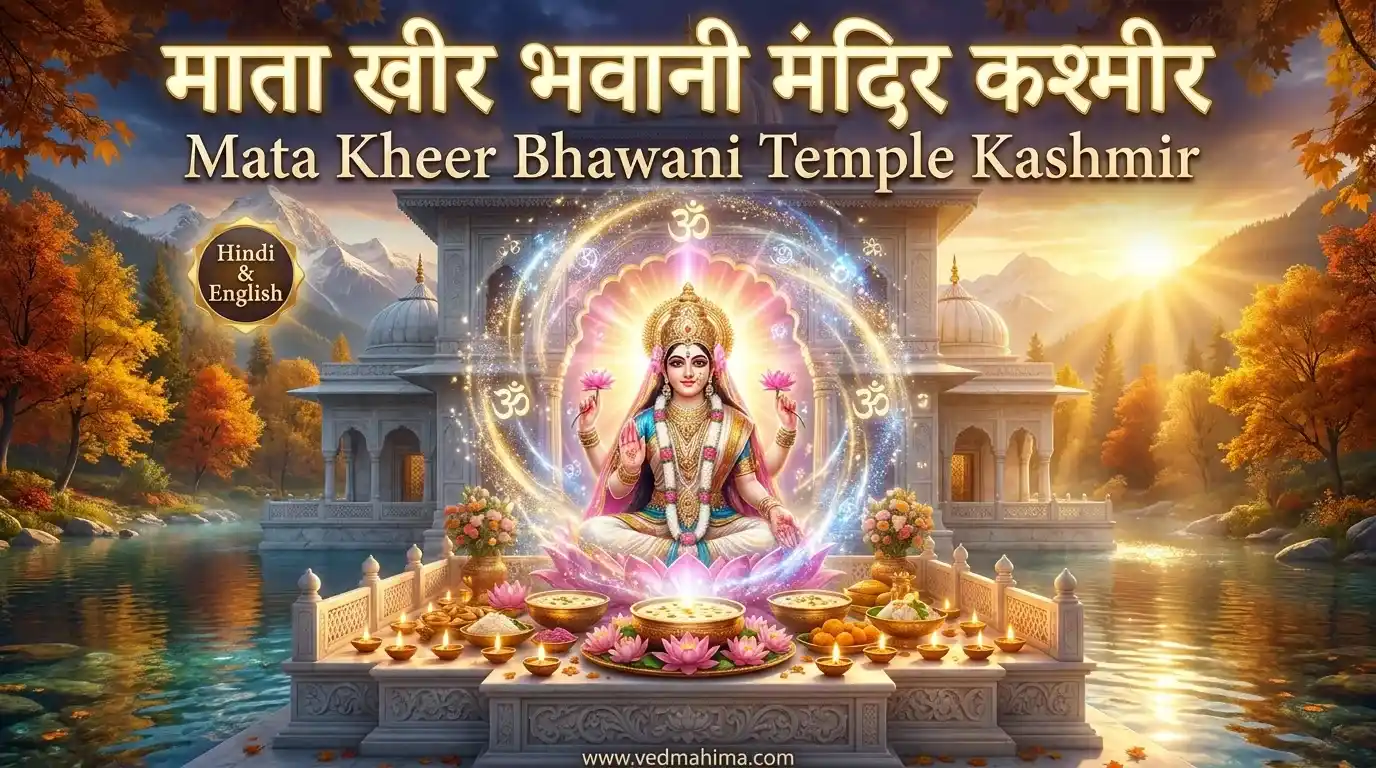
* Auspicious Shades (White and Light Pink): When the water of the spring turns milky white, translucent emerald green, or soft light pink, it is considered highly auspicious, indicating divine satisfaction, cosmic balance, and a forthcoming era of immense peace and prosperity for Jammu and Kashmir.
* The Warning Shade (Black or Dark Red): Conversely, if the water naturally darkens into deep violet, black, or a dark reddish hue, it is traditionally interpreted as a divine cosmic warning. Historically, local elders and priests observed the water turning black just before the tragic exodus of Kashmiri Pandits in 1990, during natural calamities, and during times of deep political instability in the valley.
* The Devotion of Ravana: According to ancient lore, Goddess Ragnya Bhagwati was originally stationed and worshiped in Lanka. The demon king Ravana was a fierce devotee of the Goddess and performed intense austerities to keep her divine energy in his kingdom. The Mother resided there, pleased with his initial spiritual devotion.
* Ravana's Demise and Wrath: Over time, Ravana became filled with dark ego and unrighteousness (Adharma), eventually kidnapping Mata Sita. Disgusted and enraged by his immoral actions, the Goddess withdrew her cosmic support and ordered Lord Hanuman to shift her celestial throne away from Lanka.
* The Celestial Journey to Tulmulla: Lord Hanuman reverently carried the divine matrix of the Goddess along with 360 Nagas (serpent deities) through the skies and installed her at the pristine, water-locked site of Tulmulla in Kashmir. Since then, the site has been recognized as the permanent resting seat of the Mother.
* The Grand Jesht Ashtami Mahotsav: The ultimate festival of the shrine is celebrated on the Shukla Paksha Ashtami of the Jyeshtha month (May/June). This massive annual festival sees an extraordinary influx of thousands of Kashmiri Pandits traveling from all across India and the globe back to their roots. The atmosphere turns intensely spiritual as the entire complex resonates with collective Vedic chants, continuous Recitation of the Ragnya Sahasranamam, and ringing of heavy temple bells.
* The Symbol of Communal Harmony: A deeply moving aspect of the Jesht Ashtami Mahotsav is the active participation of local Kashmiri Muslims, who set up stalls to sell milk, flowers, earthen lamps, and puja materials for their Hindu brothers. This beautiful socio-cultural interaction serves as a living testimony to Kashmiriyat (the traditional ethos of communal harmony in Kashmir).
* Maha Yagna and Continuous Community Kitchens: During the festival, a grand community fire sacrifice (Maha Yagna) is performed for global peace. Huge community kitchens (Langers) serve traditional vegetarian Kashmiri cuisine, sweet rice pudding (Kheer), and holy water to the continuous waves of pilgrims.
* The Navreh and Ashwin Ashtami Festivals: Apart from the summer festival, the Kashmiri New Year (Navreh) and the autumn Ashwin Ashtami are celebrated with great spiritual fervor, where thousands light earthen oil lamps around the heptagonal spring, turning the entire night into a golden matrix of light.
* By Road (Highways & City Cabs): Tulmulla, Ganderbal is connected to the capital city of Srinagar via highly maintained, wide provincial roads. The distance is approximately 25 km from Srinagar city center and can be covered in 45 to 60 minutes. Visitors driving up from Jammu can use the National Highway 44 (NH-44), passing through the iconic Chenani-Nashri Tunnel up to Srinagar, and then head north toward Ganderbal. Regular government buses, private tourist luxury coaches, and app-based cabs operate continuously from Lal Chowk, Dal Gate, and Srinagar bus terminals directly to the temple gate.
* By Train (Premium Rail Corridors): The nearest functional railway station is the Srinagar Railway Station (Nowgam), located about 32 km away. However, for a major nationwide rail network, Jammu Tawi Railway Station (JAT) remains the primary hub, situated roughly 290 km away. Jammu Tawi is connected via high-speed premium trains like the Vande Bharat Express and Rajdhani Express from Delhi. From Jammu, private luxury travelers and cabs are readily available to ferry pilgrims across the scenic mountain highway into Srinagar and Ganderbal.
* By Air (Airport Proximity): The absolute fastest and most comfortable gateway is the Sheikh ul-Alam International Airport in Srinagar (SXR), located roughly 35 km away from the temple site. The airport operates dozens of daily direct flights connecting to key metropolitan cities including Delhi, Mumbai, Chandigarh, and Bangalore. Pre-paid luxury tourist taxis, private sedans, and security-cleared rental cars can be booked directly from the airport terminal to drop devotees straight at the temple entrance.
⏰ Best Time
The best time to visit the Mata Kheer Bhawani Temple is during the pleasant summer months from May to September, when the weather in Kashmir is deeply soothing and comfortable. Traveling during May or June is especially significant as it allows devotees to witness the iconic and massive Annual Jesht Ashtami Mahotsav. Winters (November to February) bring harsh cold and snow, which is ideal only for those wishing to see Kashmir in its snowy avatar.
🛕 Temple Information
Tulmulla Village, Ganderbal District, Jammu & Kashmir - 191201
[ Summer Timings - April to September ]
• Temple Gates Open: 05:00 AM
• Mangala Aarti & Puja: 06:00 AM
• Mid-Day Bhog & Rest Closure: No Daytime Closure (Open Continuously)
• Sandhya Aarti (Evening Twilight): 07:15 PM
• Temple Gates Close: 09:30 PM
[ Winter Timings - October to March ]
• Temple Gates Open: 06:30 AM
• Mangala Aarti & Puja: 07:15 AM
• Mid-Day Bhog: Open Continuously throughout the day
• Sandhya Aarti (Evening Twilight): 05:45 PM
• Temple Gates Close: 07:30 PM
🔗 Related Trending Mandir
About Mata Kheer Bhawani Temple Kashmir
The history of the Jagatpita Ragnya Devi Temple, popularly revered as Kheer Bhawani, is a profound chronicle of ancient Kashmiri mysticism, royal patronages, and scriptural preservation within the Himalayas. Mentioned elegantly in Kalhana's 12th-century historical chronicle Rajatarangini, the sacred spring of Tulmulla has been a focal point of worship since ancient times. Over centuries of regional shifts and foreign influxes, the exact geographical location of the spring was temporarily lost under dense silt and marshes. It was in the late 19th century that the dynamic king of Jammu & Kashmir, Maharaja Pratap Singh, rediscovered the precise holy site based on ancient texts and built the first structured stone shrine over the spring. Later, during the early 20th century, Maharaja Hari Singh extensively renovated and expanded the shrine using pristine white marble, creating the magnificent floating temple structure seen today. Celebrated by legendary saints like Swami Vivekananda, who visited in 1898 and experienced profound spiritual revelations regarding the Mother's cosmic will, the Kheer Bhawani temple stands as the ultimate historical pillar of Kashmiri Pandit heritage, deeply anchoring the ancient roots of Shaivism and Shaktism in the valley.