Jyeshth Maas Krishna Paksha Apara Ekadashi Vrat Katha
Apara Ekadashi, Achala Ekadashi, Lord Vishnu, Vrat Katha, Ekadashi Story, Lord Vamana, Moksha
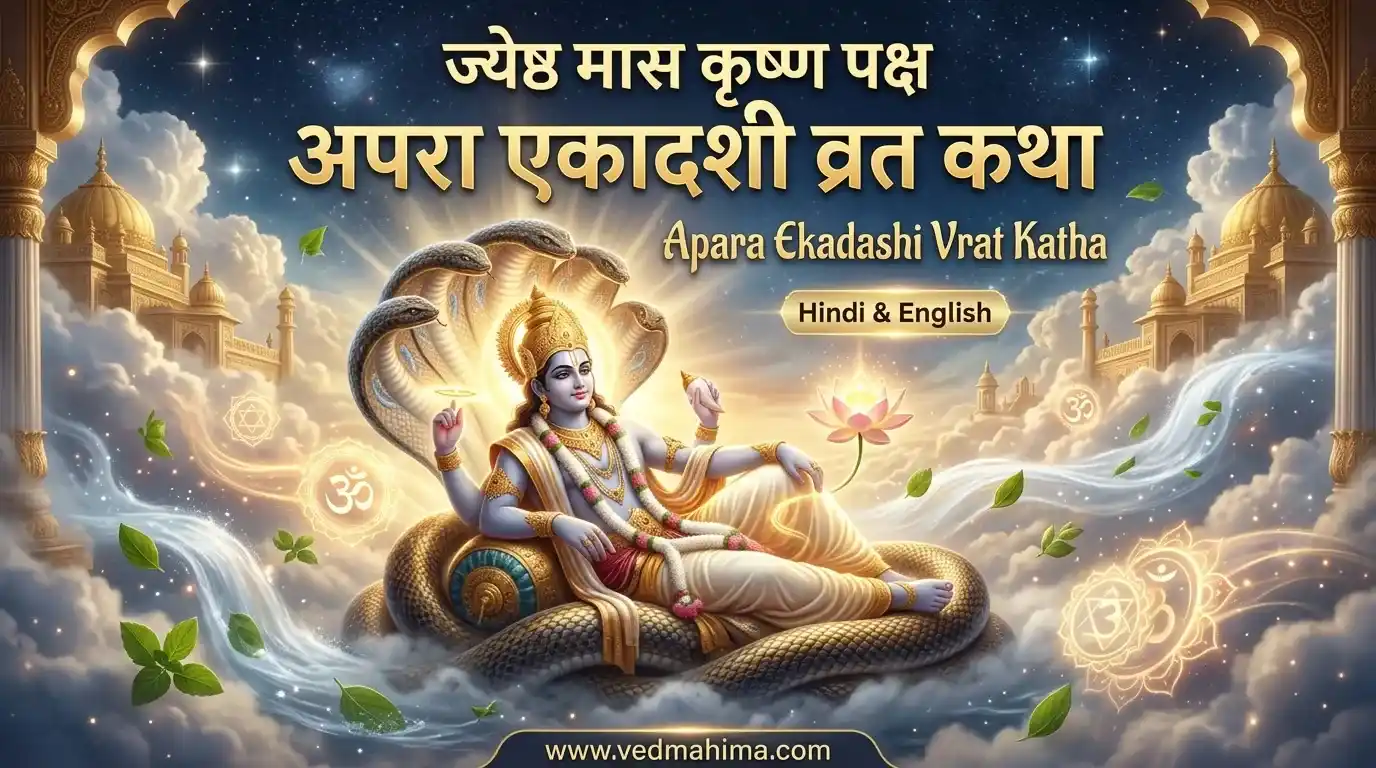
॥ Introduction ॥
Apara Ekadashi, also widely known as Achala Ekadashi, is one of the most significant and merit-bestowing fasting days dedicated to Lord Vishnu. It is observed during the Krishna Paksha (dark fortnight) of the Hindu month of Jyeshtha (according to the Amavasyant calendar) or Vaishakha (according to the Purnimant calendar). The word 'Apara' signifies limitless or boundless, indicating that the spiritual merits gained by observing this fast are infinite. Devotees observe this sacred fast with deep devotion to cleanse their souls, eliminate past sins, and seek the divine blessings of Lord Vishnu in His Vamana avatar.
॥ Importance ॥
The significance of Apara Ekadashi is considered unparalleled as it has the divine power to dissolve even the most heinous sins (Mahapatakas). According to ancient scriptures, observing this fast with complete sincerity is equivalent to performing severe penance, taking holy dips in sacred rivers like the Ganges during auspicious cosmic alignments, and donating thousands of cows. It acts as a spiritual shield that frees a person from the karmic bondages of misdeeds such as dishonesty, false testimony, and cowardice, eventually elevating their consciousness and ensuring worldly prosperity as well as spiritual liberation (Moksha).
॥ Puranic Reference ॥
The profound glories of Apara Ekadashi find their mention in ancient Hindu texts, particularly the Padma Purana and Mahabharata. In the form of a divine dialogue, Lord Shri Krishna narrated the importance of this specific tithi to King Yudhishthira, explaining how this fast can redeem even those souls who are suffering in the lowest realms of hell due to their unrighteous actions. The scriptures emphasize that worshipping Lord Vamana on this day grants stable and unshakeable (Achala) virtues to the practitioner.
॥ Story ॥
Yudhishthira asked—O Janardana! What is the name of the Ekadashi that falls during the dark fortnight (Krishna Paksha) of the month of Jyeshtha? I wish to hear its significance. Please be kind enough to narrate it to me.
Lord Shri Krishna replied—O King! You have asked an excellent question for the welfare of all the worlds. O Rajendra! The name of this Ekadashi is Apara. It bestows immense spiritual merit and destroys even the gravest of sins. Even a person burdened with the sin of killing a Brahmin, a clan member, or an unborn child, or one who slanders others and is lustful towards other women, undoubtedly becomes free from sins by observing Apara Ekadashi. Those who give false testimony, cheat in weights and measures, calculate constellations without proper knowledge, and practice medicine deceitfully under the guise of an Ayurveda expert without actual knowledge—all these are dwellers of hell. However, by observing Apara Ekadashi, even they become free from sins. If a Kshatriya abandons his duty and flees from the battlefield, he falls into a terrible hell due to deviating from his righteous path. A disciple who, after acquiring knowledge, speaks ill of his guru, also commits a grave sin and falls into a fearsome hell. But by observing Apara Ekadashi, even such individuals attain a righteous state.
The merit a person gains by bathing in Prayag when the Sun is in Capricorn (Makar Rashi), the virtue obtained by observing a fast on Shivratri in Kashi, the merit earned by a man who satisfies his ancestors by performing Pindadaana in Gaya, the fruit achieved by bathing in the Godavari when Jupiter is in Leo (Simha Rashi), the spiritual reward obtained by the darshan of Lord Kedarnath and visiting Badri-Teertha during a pilgrimage to Badrikashram, and the merit earned by performing sacrifices along with donations of elephants, horses, and gold at Kurukshetra during a solar eclipse—a person attains the very same rewards simply by observing Apara Ekadashi. By fasting on Apara and worshipping Lord Vamana, a person becomes free from all sins and gets established in the divine realm of Lord Vishnu (Vishnuloka). Reading and listening to this story bestows the spiritual merit equivalent to donating a thousand cows.
॥ Moral of the Story ॥
- No matter how grave the past sins are, sincere repentance and devotion can redeem a soul from karmic suffering.
- Truthfulness and dedication to one's duties (Dharma) are paramount, and deviating from them leads to spiritual downfall.
- Respecting spiritual guides (Gurus) and maintaining honesty in professional practices like medicine and trade are essential for moral integrity.
- Unwavering faith in Lord Vishnu and His incarnations provides ultimate peace, stability, and protection from all fears.
॥ Vrat & Worship Method ॥
- Wake up early in the morning during the Brahma Muhurta (auspicious pre-dawn period), cleanse your home, and take a holy bath.
- Wear clean, preferably yellow clothes, and take a solemn pledge (Sankalpa) to observe the Apara Ekadashi fast with pure intentions.
- Set up an altar with an idol or picture of Lord Vishnu (specifically in His Vamana or Shri Krishna form). Light a ghee lamp, incense, and offer yellow flowers, seasonal fruits, and sweets.
- Offer fresh Tulsi leaves to Lord Vishnu, as the worship is considered incomplete without Tulsi. Recite the Vishnu Sahasranama or chant the sacred mantra 'Om Namo Bhagavate Vasudevaya'.
- Read or listen to the sacred Apara Ekadashi Vrat Katha with absolute focus. Avoid anger, deceit, and negative thoughts throughout the day and stay awake at night (Jagran) singing devotional hymns.
- On the next day (Dwadashi Tithi), offer food, water, clothes, and charity to Brahmins or the needy before breaking your fast during the specified Parana time.
॥ Benefits ॥
- Grants limitless (Apara) spiritual merit, wiping out severe sins like Brahma-hatya (killing of a learned soul) and betraying one's Guru.
- Bestows immense wealth, prosperity, fame, and removes financial obstacles or poverty from the devotee's life.
- Provides the combined spiritual fruits of bathing in holy rivers, visiting sacred places like Kashi and Badrikashram, and performing grand sacrifices.
- Purifies the mind, enhances self-discipline, and helps the practitioner achieve emotional and mental stability (Achala status).
- Liberates the soul from the endless cycle of birth and death, ensuring a place in the divine abode of Lord Vishnu (Vishnuloka).
॥ Frequently Asked Questions (FAQ) ॥
Why is this Ekadashi called Apara Ekadashi?
The word 'Apara' means unlimited or boundless. This day is named Apara Ekadashi because observing this fast bestows boundless wealth, virtue, and merit upon the devotee, erasing extensive past sins.
Which deity and avatar are worshipped on Apara Ekadashi?
Lord Shri Vishnu is the presiding deity of this day, and He is specifically worshipped in His Fifth Incarnation, Lord Vamana.
What are the alternative names of Apara Ekadashi?
Apara Ekadashi is also widely known as Achala Ekadashi, which signifies unshakeable stability, as it firmly establishes the devotee in a state of righteousness and grants permanent virtues.
⏰ Best Time
The most auspicious time to read or listen to the Apara Ekadashi Katha is during the morning after completing the worship of Lord Vishnu on Ekadashi Tithi. Many devotees also recite the story during the evening worship or before performing the Ekadashi Aarti. Reading the Katha with devotion after observing the fast is believed to enhance its spiritual significance. On Dwadashi, after completing the Parana, devotees often offer food, water, clothes and charity to the needy. Listening to or reading the Katha along with chanting Vishnu Sahasranama or Om Namo Bhagavate Vasudevaya is considered highly meritorious.
🏷️ Tags
🔗 Related Pages
🔗 Related Trending Vrat-Utsav
About Jyeshth Maas Krishna Paksha Apara Ekadashi Vrat Katha
Apara Ekadashi Katha is one of the most sacred narratives associated with Lord Vishnu and Ekadashi fasting. According to Hindu tradition, this Ekadashi was observed by various kings and devotees under the guidance of sages to redeem themselves from grave sins. The story explains that observing Apara Ekadashi with complete faith and discipline grants the spiritual merit of destroying great sins like dishonesty, professional deceit, and cowardice. The Katha teaches the importance of devotion, self-control, charity and unwavering faith in Lord Vishnu. It inspires devotees to cultivate purity of mind, compassion and righteous living while strengthening their spiritual connection with the Supreme Lord. Reading or listening to this Katha with sincere devotion is believed to remove sins, bring prosperity, inner peace and ultimately guide the devotee towards liberation (Moksha).