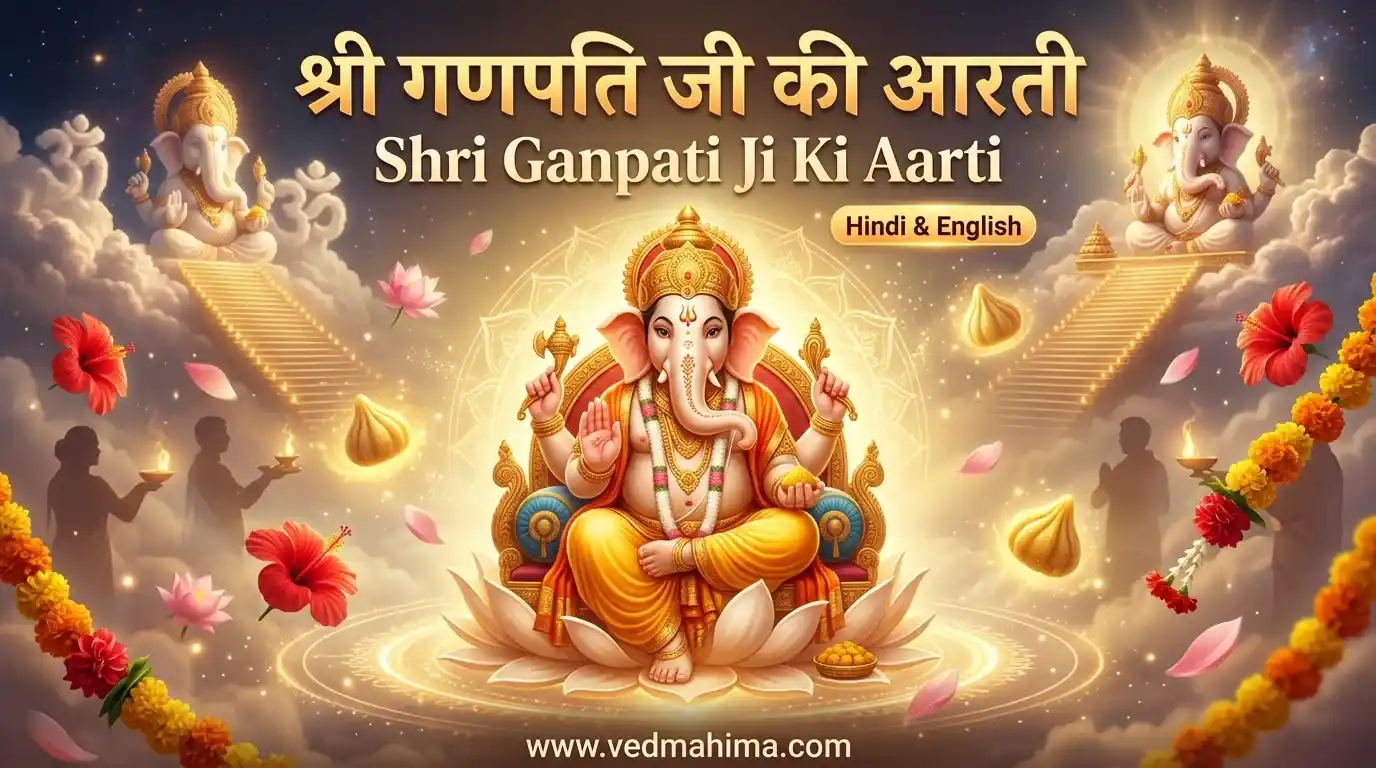
Shri Ganpati Ji Ki Aarti
Wisdom, success, obstacle removal, prosperity, knowledge, devotion
🙏 Devotional
🔥 Powerful
📿 Daily Prayer
॥ Aarti ॥
Shri Ganpati Bhaj Pragat Parvati,
Ank Birajat Avinashi.
Brahma Vishnu Shivadi Sakal Sur,
Karat Aarti Ullasi.
Trishuldhar Ko Bhagya Manikai,
Sab Juri Aaye Kailasi.
Karat Dhyan, Gandharv Gaan-Rat,
Pushpan Ki Ho Varsha-Si.
Dhani Bhavani Vrat Sadhi Lahyo,
Jin Putra Param Golokasi.
Achal Anadi Akhand Paratpar,
Bhakt Hetu Bhav-Parkasi.
Vidya Buddhi Nidhan Gunakar,
Bighna Binasan Dukhnasi.
Tushti Pushti Shubh Laabh Lakshmi,
Sang Riddhi Siddhi-Si Hain Dasi.
Sab Karaj Jag Hot Siddh Shubh,
Dwadash Naam Kahe Chhasi।.
Kamdhenu Chintamani Surtaru,
Char Padarath Detasi.
Gaj-Anan Shubh Sadan Radan,
Ik Sundi Dhundhi Pur Pooja-Si.
Char Bhuja Modak-Kartal Saji,
Ankus Dharat Farsa-Si.
Byal Sutra Trinetra Bhal Sasi,
Undurvahan Sukhrasi.
Jinke Sumiran Sevan Karte,
Toot Jaat Jam Ki Faansi.
Krishnapal Dhari Dhyan Nirantar,
Man Lagay Jo Koi Gaasi.
Door Karen Bhav Ki Badha Prabhu,
Mukti Janm Nijpad Paasi.
Shri Ganpati Bhaj Pragat Parvati,
Ank Birajat Avinashi.
Brahma Vishnu Shivadi Sakal Sur,
Karat Aarti Ullasi.
Trishuldhar Ko Bhagya Manikai,
Sab Juri Aaye Kailasi.
Karat Dhyan, Gandharv Gaan-Rat,
Pushpan Ki Ho Varsha-Si.
Dhani Bhavani Vrat Sadhi Lahyo,
Jin Putra Param Golokasi.
Achal Anadi Akhand Paratpar,
Bhakt Hetu Bhav-Parkasi.
Vidya Buddhi Nidhan Gunakar,
Bighna Binasan Dukhnasi.
Tushti Pushti Shubh Laabh Lakshmi,
Sang Riddhi Siddhi-Si Hain Dasi.
Sab Karaj Jag Hot Siddh Shubh,
Dwadash Naam Kahe Chhasi।.
Kamdhenu Chintamani Surtaru,
Char Padarath Detasi.
Gaj-Anan Shubh Sadan Radan,
Ik Sundi Dhundhi Pur Pooja-Si.
Char Bhuja Modak-Kartal Saji,
Ankus Dharat Farsa-Si.
Byal Sutra Trinetra Bhal Sasi,
Undurvahan Sukhrasi.
Jinke Sumiran Sevan Karte,
Toot Jaat Jam Ki Faansi.
Krishnapal Dhari Dhyan Nirantar,
Man Lagay Jo Koi Gaasi.
Door Karen Bhav Ki Badha Prabhu,
Mukti Janm Nijpad Paasi.
🙏 ॥ Thus completed ॥ 🙏
The Hindi text has been compiled based on original and authentic sources. If there is any difference,
error, or inconsistency between the Hindi and English versions, the Hindi text shall be considered the
authoritative version. If there are any errors or copyright-related concerns regarding this content,
please contact us.
📜 प्रामाणिक स्रोत:
📖 पारंपरिक लोकप्रचलित पाठ
About Shri Ganpati Ji Ki Aarti
The hymn Shri Ganpati Bhaja Pragat Parvati is a highly profound, descriptive, and spiritually rich stuti dedicated to Lord Ganesha, traditionally credited to the devotee or poet Krishnapala. Unlike common hymns, this text beautifully encapsulates both the cosmic, absolute reality (Paratpar Brahman) and the sweet, accessible form of Lord Ganesha as the playful child sitting in the lap of Mother Parvati (Parvati Ank Birajat). It depicts a majestic celestial scene where supreme deities like Lord Brahma, Lord Vishnu, and Lord Shiva, along with all heavenly gods and Gandharvas, joyfully gather at Mount Kailash to perform his aarti amid a divine rain of flowers.
The verses deep-dive into the mystical and physical attributes of Ganesha. He is described as the storehouse of wisdom and intellect (Vidya-Buddhi-Nidhaan), the destroyer of cosmic hurdles, and the one whose holy feet are served by divine energies like Tushti, Pushti, Shubh, Labh, Goddess Lakshmi, Riddhi, and Siddhi. The stuti highlights that merely remembering his twelve sacred names (Dvaadas Naam) functions like the wish-fulfilling cow (Kamadhenu) and the desire-granting tree (Kalpavriksha), effortlessly bestowing the four ultimate human accomplishments (Dharma, Artha, Kama, Moksha).
The text portrays his iconic form: his elephant face (Gaja-Ananan), single tusk (Radan Ik), four arms holding an axe and a goad, a sweet Modak in hand, a snake as his sacred thread (Byaal Sutra), three eyes, a crescent moon adorning his forehead, and his mouse mount (Undurvaahan). The spiritual climax of the stuti ensures that sincere meditation on this form cuts down the direct noose of death (Yama ki Phaansi), liberates the soul from the binding cycles of birth and rebirth, and grants eternal residence in the divine state.
The verses deep-dive into the mystical and physical attributes of Ganesha. He is described as the storehouse of wisdom and intellect (Vidya-Buddhi-Nidhaan), the destroyer of cosmic hurdles, and the one whose holy feet are served by divine energies like Tushti, Pushti, Shubh, Labh, Goddess Lakshmi, Riddhi, and Siddhi. The stuti highlights that merely remembering his twelve sacred names (Dvaadas Naam) functions like the wish-fulfilling cow (Kamadhenu) and the desire-granting tree (Kalpavriksha), effortlessly bestowing the four ultimate human accomplishments (Dharma, Artha, Kama, Moksha).
The text portrays his iconic form: his elephant face (Gaja-Ananan), single tusk (Radan Ik), four arms holding an axe and a goad, a sweet Modak in hand, a snake as his sacred thread (Byaal Sutra), three eyes, a crescent moon adorning his forehead, and his mouse mount (Undurvaahan). The spiritual climax of the stuti ensures that sincere meditation on this form cuts down the direct noose of death (Yama ki Phaansi), liberates the soul from the binding cycles of birth and rebirth, and grants eternal residence in the divine state.