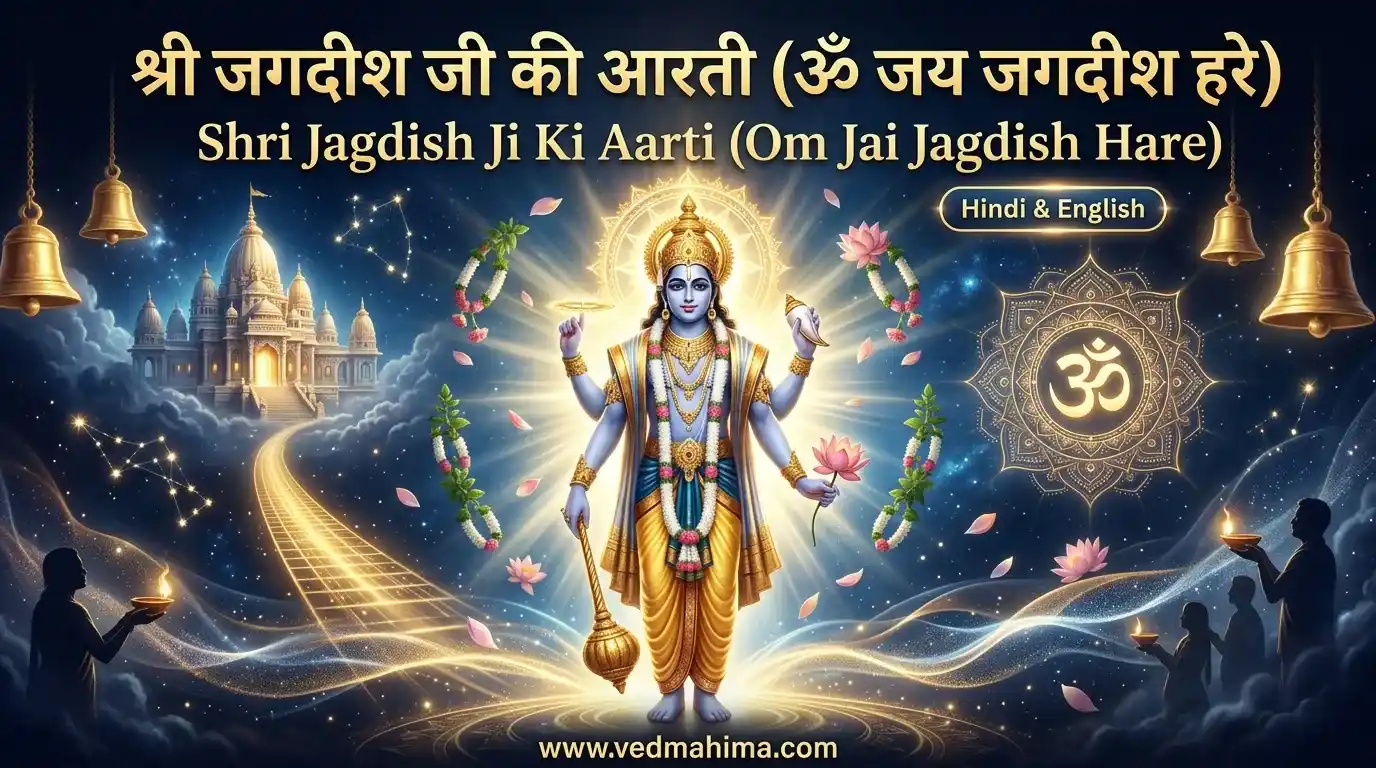
Sarvroop Bhagvan Ji Ki Aarti
Preservation, protection, dharma, peace, prosperity, devotion
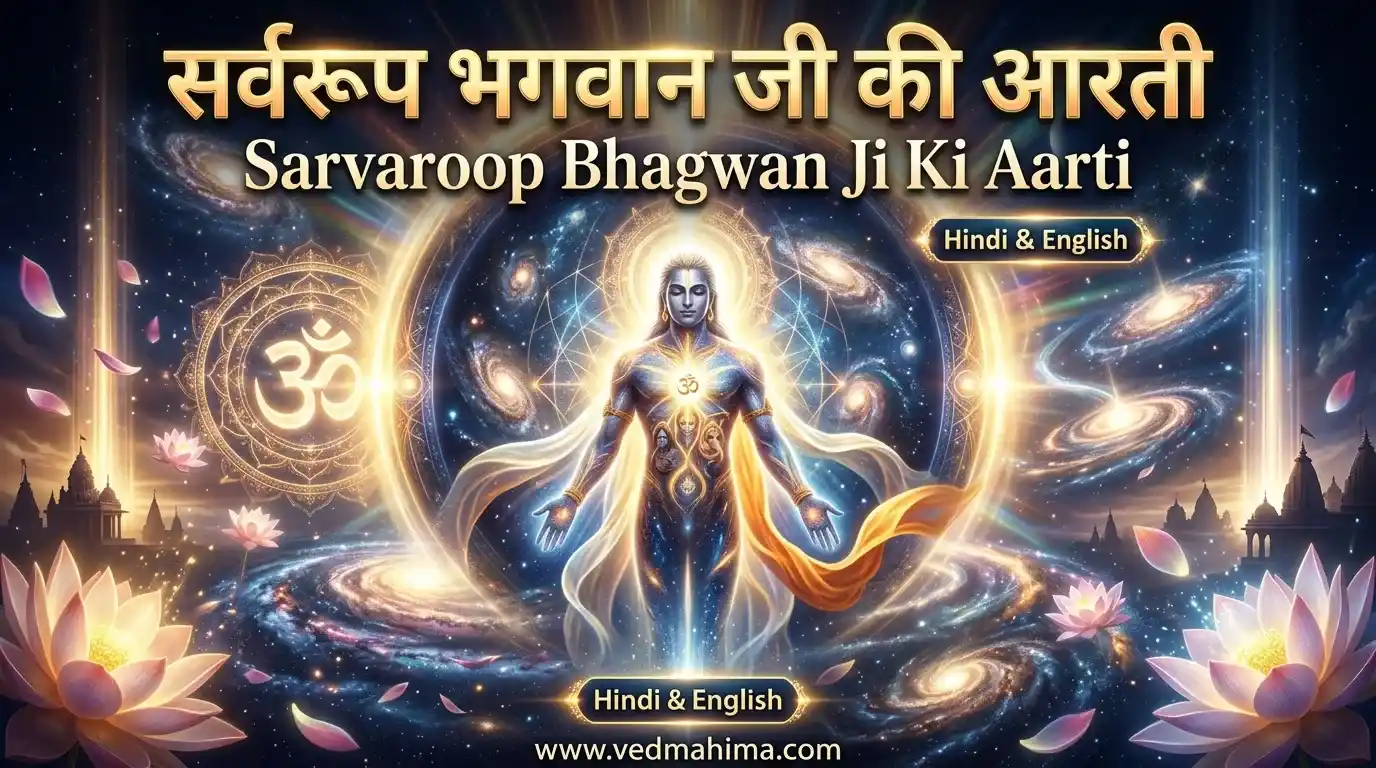
Jai Jagdish Hare,
Prabhu ! Jai Jagdish Hare.
Mayatit, Maheshwar,
Man-Vach-Buddhi Pare.
Aadi, Anaadi, Agochar,
Avichal, Avinashi.
Atul, Anant, Anamay,
Amit, Shakti-Raashi.
Jai Jagdish Hare.
Amal, Akal, Aj,
Akshay, Avyay, Avikari.
Sat-Chit-Sukhmaya,
Sundar Shiv Sattadhari.
Jai Jagdish Hare.
Vidhi-Hari-Shankar-Ganpati,
Surya-Shakti-Rupa.
Vishva Charachar Tum Hi,
Tum Hi Jagbhupa.
Jai Jagdish Hare.
Mata-Pita-Pitamah,
Swami-Suhard Bharta.
Vishvotpadak Palak,
Rakshak Sanharta.
Jai Jagdish Hare.
Sakshi, Sharan, Sakha, Priya,
Priyatam, Purna Prabho.
Keval-Kaal Kalanidhi,
Kalateet Vibho.
Jai Jagdish Hare.
Ram-Krishna, Karunamay,
Premamrit Sagar.
Man-Mohan Murlidhar,
Nit-Nav Natnagar.
Jai Jagdish Hare.
Sab Bidhi Heen, Malin-Mati,
Hum Ati Pataki-Jan,
Prabhu-Pad Vimukh Abhagi,
Kali-Kalushit Tan-Man.
Jai Jagdish Hare.
Aashray-Daan Dayarnav!
Hum Sabko Deeje,
Paap-Taap Har Hari! Sab,
Nij-Jan Kar Leeje.
Jai Jagdish Hare.
⏰ Best Time
This universal Sarvroop Bhagvan Aarti can be sung daily during morning or evening prayers. It is highly suited for broad spiritual gatherings, Ekadashi, Poornima, or any prayer service where the supreme formless Brahman or unified cosmic deity is worshipped.
🔗 Related Trending Aarti
About Sarvroop Bhagvan Ji Ki Aarti
The hymn Sarvroop Bhagvan Ki Aarti (bearing the universal refrain Jai Jagdish Hare) is a deeply philosophical and spiritually magnificent composition that shifts away from sectarian boundaries to worship the ultimate, all-encompassing Divine Reality (Parabrahman). It describes God not just as an individual deity, but as the supreme consciousness that is beyond illusions (Mayaateet), beyond the reach of human mind, speech, or intellect (Man-Vach-Buddhi Pare), and yet exists as the ultimate ruler of the universe (Maheshwar).
The verses are heavily filled with deep Vedic philosophies, glorifying the Lord as timeless (Anaadi), indestructible (Avinaashi), birthless (Aj), and the absolute embodiment of Truth, Consciousness, and Bliss (Sat-Chit-Sukhmay). Beautifully harmonizing various paths of Hinduism, the aarti proclaims that the supreme energy itself manifests as Brahma (Vidhi), Vishnu (Hari), Shiva (Shankar), Ganesha (Ganpati), the Sun (Surya), and Goddess Durga (Shaktiroopa). It shifts fluidly between the formless absolute and the sweet, personal aspects of God, praising Him as both the creator-destroyer of the cosmos and the lovable, flute-playing Lord Krishna (Murleedhar) and Lord Rama.
The concluding lines express ultimate surrender and humility (Saranagati). The devotee identifies as being bound by the illusion and impurities of the dark age (Kali-Kalushit Tan-Man) and begs the Ocean of Mercy (Dayaarnav) for shelter, protection from the three worldly miseries (Paap-Taap), and the grace to be accepted as His very own.