Kartik Maas Krishna Paksha Karwa Chauth Vrat Katha
Marital Bliss, Long Life, Love, Loyalty, Good Fortune, Blessings, Devotion
॥ Introduction ॥
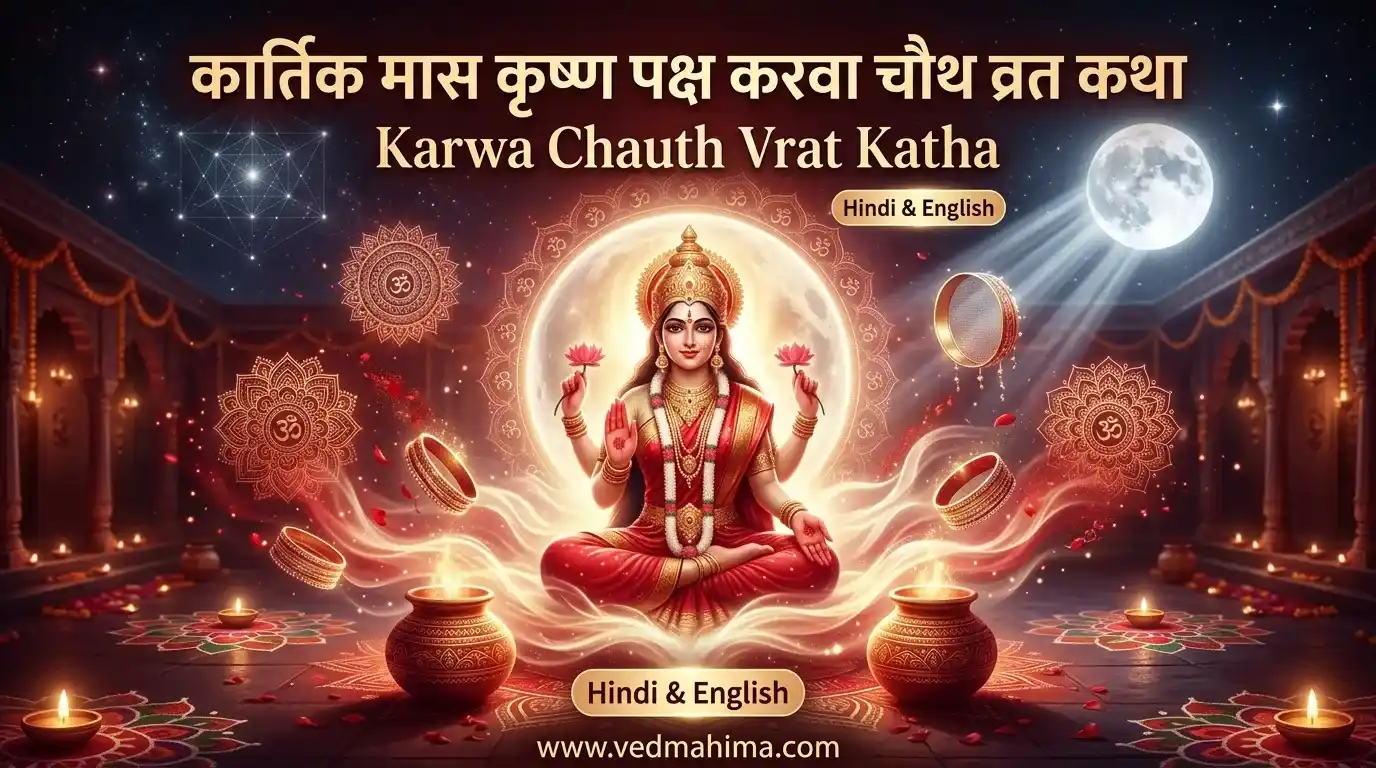
Karwa Chauth is an exceptionally sacred, deeply revered, and emotionally profound fasting day in Sanatan Dharma, observed on the Chaturthi Tithi of the dark fortnight (Krishna Paksha) in the holy month of Kartik. On this auspicious day, married women (Suhagins) observe a strict waterless fast from sunrise until moonrise, praying intensely to Lord Ganesha, Lord Shiva, and Goddess Parvati for the longevity, prosperity, and safety of their husbands. It stands as a timeless symbol of marital devotion, love, and the divine protective shield of a wife’s faith over her husband’s life.
॥ Importance ॥
The profound importance of Karwa Chauth lies in its power to bestow an unbreakable bond of matrimony (Akhand Saubhagya). Falling in the transitional month of Kartik, this fast demands immense physical endurance and absolute mental discipline. Traditional scriptures emphasize that observing this fast with pure intentions protects the husband from untimely death, accidents, and life obstacles, filling the entire household with mutual love, material abundance, and spiritual peace.
॥ Puranic Reference ॥
The divine reference of this holy day is beautifully recorded through the ancient story of a beautiful young woman named Veeravati, the only sister among seven brothers in a righteous Brahmin family. The legend vividly illustrates how an unintentional mistake caused by a brother's deep affection led to a tragic event, and how unwavering devotion, regular observation of the monthly Chaturthi fasts, and the grace of Goddess Indrani ultimately restored life and divinity to a deceased husband.
॥ Story ॥
In ancient times, there lived a righteous Brahmin named Vija, who was blessed with seven sons and an exceptionally beautiful daughter named Veeravati. Being the only sister, she was deeply loved and pampered by all her seven brothers. After her marriage, Veeravati observed her first Karwa Chauth fast at her parental home.
As the day progressed, the strict waterless fast took a heavy toll on her health. Overwhelmed by extreme hunger, thirst, and physical exhaustion, Veeravati fainted and fell unconscious on the ground. Seeing their beloved sister in such immense agony, the seven brothers were filled with deep sorrow and could not bear her suffering.
They revived her by washing her face with fresh water. To relieve her suffering, one of the clever brothers climbed a massive banyan tree nearby. He held a burning lamp behind a sieve (chalni) and called out to Veeravati, claiming that the moon had finally risen in the sky. Mistaking the glowing light of the fire for the auspicious moon, Veeravati left her grief behind, offered Arghya (water libation) to the false moon, and sat down to break her fast.
As she took her very first bite of food, she found a strand of hair in it. In her second bite, someone sneezed nearby, which was a bad omen. As she took her third bite, an urgent summons arrived from her in-laws' house. Upon rushing to her husband's home, she was completely devastated to find her husband lying dead.
Overwhelmed with ultimate grief, Veeravati began to weep inconsolably. By divine coincidence, Goddess Indrani arrived at the spot. Seeing her, Veeravati fell at her holy feet, crying out, "O Divine Mother! For what grave sin am I facing this terrible punishment? Please have mercy on me and restore my husband back to life!"
Goddess Indrani compassionately replied, "O child! You broke your sacred fast by offering Arghya before the actual moonrise, deceived by a false light. This tragic loss is the direct consequence of breaking the ritual. If you wish to redeem yourself, you must observe all the twelve monthly Chaturthi fasts along with the main Karwa Chauth fast next year with absolute devotion and proper rituals. Only then will your husband rise again."
Hearing the words of the Goddess, Veeravati observed the monthly Chaturthi fasts for an entire year with immense faith and flawless devotion. By the supreme spiritual power of these fasts and the divine blessings of the deities, her husband miraculously came back to life, healthy and radiant like a demigod. Since that auspicious day, the tradition of Karwa Chauth has been celebrated across generations. O Karwa Mata! Just as you protected the husband of Veeravati, protect the husbands of all women observing this fast.
॥ Moral of the Story ॥
- Spiritual rituals demand absolute patience and exact timing; acting in haste or under illusion can lead to a spiritual downfall.
- A mistake made out of ignorance can be corrected through sincere repentance, consistent devotion, and guidance from enlightened beings.
- The bond of love between siblings is pure, but it should not interfere with one's individual spiritual commitments and duties.
- A wife's unwavering determination and willingness to perform severe penance possess the dynamic power to conquer death itself.
॥ Vrat & Worship Method ॥
- Wake up during Brahma Muhurta on Kartik Krishna Chaturthi, consume the traditional 'Sargi' (healthy meal prepared by the mother-in-law) before sunrise, and take a solemn vow (Sankalpa) of a Nirjala (waterless) fast.
- Keep a strict waterless fast throughout the day, avoiding even a single drop of water, while focusing your mind on divine prayers.
- In the afternoon or evening, clean the worship area and draw the image of Karwa Chauth Mata or place a picture of Lord Ganesha, Shiva, and Parvati. Fill an earthen pot (Karwa) with water, place a lid over it, and put some wheat grains and a coin on top.
- Listen to or recite the sacred Karwa Chauth Vrat Katha intently in a group or individually, holding a few grains of rice or wheat in your hand.
- When the actual moon rises in the night, look at the moon through a sieve, offer Arghya using the water from the Karwa, perform the Aarti, and pray for your husband's longevity.
- Break the fast (Parana) by taking the first sip of water and a sweet from your husband's hands, followed by a pure Satvik dinner.
॥ Benefits ॥
- Grants an unbreakable bond of marriage, ensuring a long, healthy, and prosperous life for the husband.
- Washes away past marital friction, bringing absolute emotional harmony, mutual respect, and love between couples.
- Removes any unforeseen dangers, accidents, or evil eyes hovering over the husband's career and life.
- Fills the entire household with domestic peace, stability, material abundance, and happiness.
॥ Frequently Asked Questions (FAQ) ॥
Can we eat or drink something during the Karwa Chauth fast?
Traditionally, Karwa Chauth is observed as a strict Nirjala fast. No food or water is consumed from sunrise until the moon is visible at night. However, a pre-dawn meal called 'Sargi' is consumed before sunrise. If a woman is pregnant, sick, or elderly, she can modify the fast to consume milk, juice, fruits, or water after the evening katha.
When and how should the fast be broken (Parana)?
The fast is broken only after sighting the moon at night. Married women look at the moon and then at their husband's face through a sieve (chalni). They offer water (Arghya) to the moon, perform a brief ritual, and then conclude the fast by taking water from their husband's hands.
What should be eaten during Parana (breaking the fast)?
The fast should be broken with a sip of water and a sweet piece of prasad. For dinner, traditional Satvik food prepared for the festival—such as Poori, Halwa, Chole, Kheer, or seasonal vegetables cooked without onion and garlic—should be consumed.
Why did Veeravati's husband die in the story?
Veeravati's husband passed away because she unintentionally broke the rules of the fast by offering Arghya to a false artificial light created by her brothers, thinking it was the actual moon.
⏰ Best Time
The most auspicious time to read or listen to the Karwa Chauth Vrat Katha is during the evening puja, a few hours before moonrise. At this sacred time, married women gather together and follow the traditional ritual of exchanging karwas (Karwa Ferna) while holding wheat grains in their hands as they listen to the story with devotion and faith. According to Hindu beliefs, listening to the Karwa Chauth Vrat Katha at this time brings blessings of unbroken marital bliss (akhand saubhagya), long life for the husband, and happiness and prosperity in married life.
🏷️ Tags
🔗 Related Trending Vrat-Utsav
About Kartik Maas Krishna Paksha Karwa Chauth Vrat Katha
The Karwa Chauth story is a deeply sacred and traditional Hindu narrative that highlights the power of a wife’s love, devotion, sacrifice, and the strict observance of fasting rituals. This story explains how Queen Veeravati, out of love and concern for her brothers, unknowingly broke her Karwa Chauth fast due to a deception. As a result, her husband’s life was tragically lost.
Devastated by this loss, Veeravati sought guidance from Goddess Indrani. Following her divine advice, she observed a disciplined fast of the Chauth vrat for twelve consecutive months with complete devotion, strict rituals, and unwavering faith. Pleased with her dedication and sincerity, the divine powers restored her husband’s life, bringing back happiness and prosperity to her marital home.
This mythological tale conveys the importance of discipline, devotion, and the sanctity of marital duty (dampatya dharma). It also emphasizes that sincere faith, strict observance of vows, and divine blessings can overcome even the greatest tragedies.
The Karwa Chauth fast is traditionally observed by married women for the long life, health, and prosperity of their husbands. On this day, women fast from sunrise to moonrise without food or water, pray for their spouse’s well-being, and break the fast only after sighting the moon.
Even today, millions of women observe Karwa Chauth with deep faith and devotion. This story remains a powerful symbol of love, commitment, sacrifice, and the spiritual strength of a devoted wife within Indian tradition and culture.