Vaishakha Maas Shukla Paksha Mohini Ekadashi Vrat Katha
Destruction Of Illusion, Destruction Of Sins, Devotion, Virtue, Liberation, Peace, Welfare
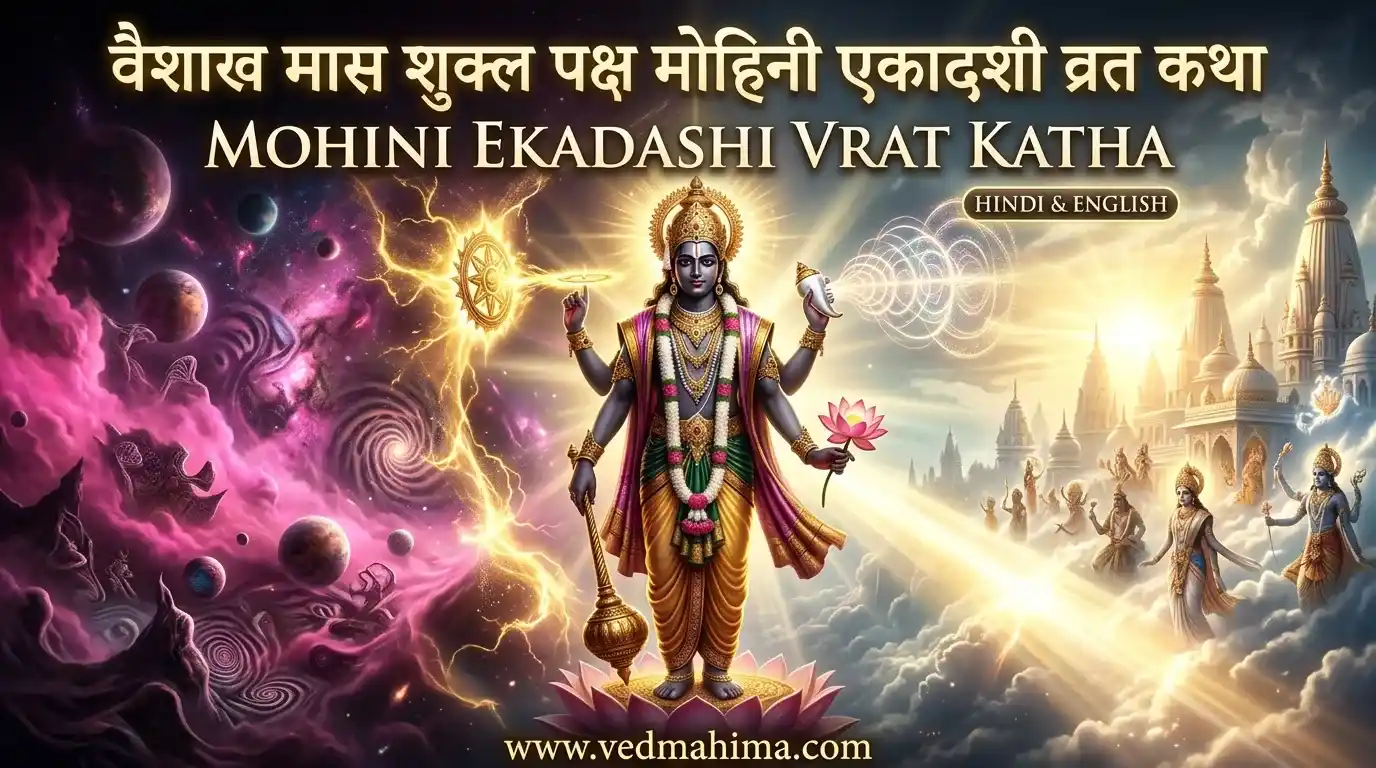
॥ Introduction ॥
The Ekadashi that falls during the bright fortnight (Shukla Paksha) of the Hindu calendar month of Vaishakha is universally celebrated as Mohini Ekadashi. True to its cosmic name 'Mohini' (meaning the destroyer of worldly illusion or delusion), this exceptionally sacred day holds a supreme status in Sanatan Dharma. Dedicated entirely to Lord Vishnu, this fast possesses the ultimate divine power to cut through the heavy evolutionary net of illusion (Moha-jala), dissolve accumulated historical sins, and elevate the fallen soul directly to the spiritual realm.
॥ Importance ॥
The spiritual excellence of Mohini Ekadashi is highly praised by Lord Shri Krishna Himself. It is described as a highly potent spiritual purifier that can eradicate mountains of sins as massive as Mount Meru, accumulated across multiple lifetimes. Reading, hearing, or deeply meditating upon the holy glory of this fast bestows a human being with the immense spiritual merit equivalent to performing one thousand sacred cow donations (Sahasra Godan), ensuring freedom from all worldly miseries and sorrow.
॥ Puranic Reference ॥
The holy narrative of this fast is rooted in an ancient celestial dialogue between King Yudhishthira and Lord Shri Krishna during the Dwapar Yuga. The Lord revealed that in ancient times, the supreme personality of Lord Ramachandra asked his spiritual master, Maharsi Vashistha, for a vow capable of destroying all sins and miseries. Through Vashistha's historical account of the beautiful city of Bhadravati on the banks of the Saraswati River, involving the wealthy merchant Dhanapala and his highly fallen fifth son, Drishtabuddhi, who was redeemed by Sage Kaundinya, the text perfectly demonstrates the absolute redeeming power of Mohini Ekadashi.
॥ Story ॥
King Yudhishthira asked—O Janardana! Salutations unto You. Please tell me which Ekadashi occurs during the bright fortnight (Shukla Paksha) of the month of Vaishakha? What is its spiritual fruit, and what is the precise scriptural method to execute it?
Lord Shri Krishna replied—O Maharaj! In ancient times, the exceptionally wise Lord Ramachandra asked the exact same question to Maharsi Vashistha, which you are asking me today.
Shri Rama said—O Holy Master! I wish to hear about the ultimate vow among all fasts, which causes the absolute destruction of all sins and removes every form of human sorrow.
Sage Vashistha replied—O Shri Rama! You have asked an exceptionally noble question. Human beings become completely purified of all sins by merely uttering Your divine name! Nevertheless, out of an absolute desire for the welfare of humanity, I shall describe this highly sacred and supreme vow. The Ekadashi that falls during the bright fortnight of the month of Vaishakha is celebrated as 'Mohini'. It is the ultimate destroyer of all sins. By the profound influence of its fast, human beings immediately break free from the intricate web of illusion (Moha-jala) and the entire mass of accumulated sins.
On the beautiful and scenic banks of the Saraswati River, there was a magnificent city named Bhadravati. In that city, King Dhritiman, a highly truthful ruler belonging to the celebrated Lunar Dynasty (Chandravamsha), reigned supreme. In that same city lived a highly prosperous and wealthy merchant named Dhanapala, who was abundant in wealth and grains. He was eternally engaged in performing righteous, meritorious deeds. He regularly constructed public water stations (Paunsala), wells, monasteries (Matha), gardens, water reservoirs, and rest houses for the welfare of others. He possessed deep, heartfelt devotion toward Lord Vishnu and always maintained a peaceful composure.
Dhanapala had five sons: Sumana, Dyutiman, Medhavi, Sukrita, and Drishtabuddhi. Drishtabuddhi was the fifth son. He was perpetually engaged in performing severe, massive sins. He possessed intense attachment toward gambling and other destructive vices. He was eternally desperate to associate with prostitutes. His intellect was never inclined toward the worship of deities, nor did he maintain any respect for his ancestors or righteous Brahmins. That wicked soul walked constantly on the path of injustice and systematically wasted his father's hard-earned wealth. One day, he was publicly seen walking through a crossroads with his arm around a prostitute's neck.
Witnessing his extreme degradation, his father completely cast him out of the family home, and his relatives also abandoned him altogether. Left with nothing, he began wandering aimlessly from one place to another, deeply drowned in continuous sorrow, grief, and suffering intense hardships. One day, due to the sudden awakening of some past accumulated merit (Punya), he arrived at the sacred hermitage of Maharsi Kaundinya. It was the holy month of Vaishakha. The great ascetic Kaundinya had just returned to his hermitage after taking a holy bath in the sacred river Ganga. Burnt by the heavy weight of his sorrow, Drishtabuddhi approached the great sage, folded his hands with deep humility, and stood before him.
Drishtabuddhi pleaded—'O Brahmin! O best among twice-born souls! Please show absolute mercy upon me and instruct me regarding a fast, by whose spiritual merit I may achieve complete liberation from my sins.'
Sage Kaundinya replied—Observe the sacred fast of the Ekadashi famous by the name of 'Mohini' during the bright fortnight of the Vaishakha month. By observing a complete fast on Mohini Ekadashi, a living being's massive sins accumulated across multiple births—even those as colossal as Mount Meru—are completely incinerated and destroyed.
Sage Vashistha continued—O Ramachandra! Hearing these compassionate words of the sage, Drishtabuddhi's heart was filled with absolute joy. Under the precise instructions of Sage Kaundinya, he flawlessly executed the vow of Mohini Ekadashi. O best among kings! By performing this supreme fast, he became completely sinless. He assumed a radiant divine body, mounted the celestial eagle Garuda, and ascended directly to the ultimate abode of Lord Vishnu (Vishnu-dhama), completely free from all material afflictions and disturbances. Therefore, this Mohini fast is exceptionally supreme. Reading or hearing its sacred glory bestows the immediate structural fruit of donating one thousand cows.
॥ Moral of the Story ॥
- No soul is beyond redemption; even a highly fallen individual like Drishtabuddhi can be completely purified if he genuinely repents and seeks shelter under a true sage.
- Sincere repentance opens the door to grace; when Drishtabuddhi humbly accepted his mistakes and sought a way out, cosmic grace immediately guided him to an advanced spiritual master.
- The power of holy association; arriving at the hermitage of Sage Kaundinya just after his Ganga bath provided Drishtabuddhi with the immediate structural remedy for his ruined life.
- Material infatuation leads to total ruin; wasting life and wealth in short-lived desires brings isolation, while the spiritual path of Ekadashi restores lost glory and grants an eternal body.
॥ Vrat & Worship Method ॥
- On Vaishakha Shukla Dashami, consume a single pure Satvik meal before sunset and maintain strict mental and physical purity.
- On the morning of Ekadashi, wake up during Brahma Muhurta, take a holy bath, wear clean clothes, and take a firm vow (Sankalpa) to fast before Lord Vishnu.
- Set up a clean altar, place an idol or image of Lord Vishnu, and perform worship using sandalwood paste, yellow flowers, seasonal fruits, incense, and a pure ghee lamp.
- Offer fresh Tulsi leaves mandatorily to the Lord, as Tulsi is deeply dear to Lord Narayana.
- Spend the entire day chanting the holy names of Vishnu and reading or listening to this sacred Mohini Ekadashi Vrat Katha with deep devotion.
- Observe a strict night vigil (Jagaran), staying awake alongside fellow devotees, singing bhajans to maximize the fast's structural efficiency.
- On Dwadashi morning, perform regular morning prayers, offer food and charity to righteous Brahmins, and break the fast within the specified Parana window.
॥ Special Rules for Mohini Ekadashi ॥
- Sincere Contrition: Like Drishtabuddhi, the practitioner must deeply look inward, confess past errors before the Lord, and resolve to walk a path of righteousness.
- Breaking the Web of Illusion: On this day, consciously distance oneself from material attachments, greed, and lust, focusing entirely on the eternal reality of Lord Vishnu.
- Purity of Speech: Avoid all harsh words, criticism of others, and untruthful speech to protect the massive merit generated by the fast.
॥ Parana (Breaking the Fast) Method ॥
- The fast must be broken on Dwadashi Tithi strictly after sunrise and after the completion of the Hari Vasara period.
- Break the fast calmly by taking holy Charanamrit, Tulsi water, or simple Satvik prasadam.
॥ Benefits ॥
- Completely breaks the powerful web of worldly illusion (Moha-jala) and attachment that binds a soul to the cycle of birth and death.
- Incinerates massive mountains of sins accumulated across multiple lifetimes, even those as massive as Mount Meru.
- Restores mental peace, cleanses psychological blockages, and frees an individual from all forms of material afflictions and miseries.
- Reading or hearing this sacred mahtmya grants the immediate spiritual merit equivalent to performing one thousand cow donations (Sahasra Godan) and ensures a permanent heavenly abode in Vishnu-loka.
॥ Frequently Asked Questions (FAQ) ॥
What is the name of the Ekadashi that falls during Vaishakha Shukla Paksha?
The Ekadashi that falls during the bright fortnight of the month of Vaishakha is known as Mohini Ekadashi.
Which historical dialogue forms the background of the Mohini Ekadashi narrative?
The background of the narrative is formed by a historical dialogue between Lord Ramachandra and his spiritual master, Maharsi Vashistha.
Who was liberated from Meru-like massive sins in this story by keeping the Mohini Ekadashi fast?
Drishtabuddhi, the fallen fifth son of the wealthy merchant Dhanapala of Bhadravati city, was completely liberated from his massive sins.
What merit is obtained by reading or hearing the Mohini Ekadashi Katha?
Reading or hearing the sacred mahtmya of this Ekadashi grants the immediate spiritual fruit equivalent to performing one thousand cow donations (Sahasra Godan).
⏰ Best Time
The absolute best and highly recommended time to read or listen to the Vaishakha Mohini Ekadashi Vrat Katha is during the early morning hours after taking a bath during the Sankalpa ritual, or in the evening while performing the primary deepdan ceremony before Lord Vishnu.
🏷️ Tags
🔗 Related Pages
🔗 Related Trending Vrat-Utsav
About Vaishakha Maas Shukla Paksha Mohini Ekadashi Vrat Katha
Vaishakha Mohini Ekadashi Katha beautifully highlights the infinite forgiving grace of Lord Vishnu and the cosmic potency of sacred fasting over lifetimes of sin. Through the profound transformation and direct ascension of Drishtabuddhi via Sage Kaundinya's guidance, the text establishes that no structural mountain of sin is too heavy for the redeeming light of Mohini Ekadashi, which unties the soul from all material illusion.