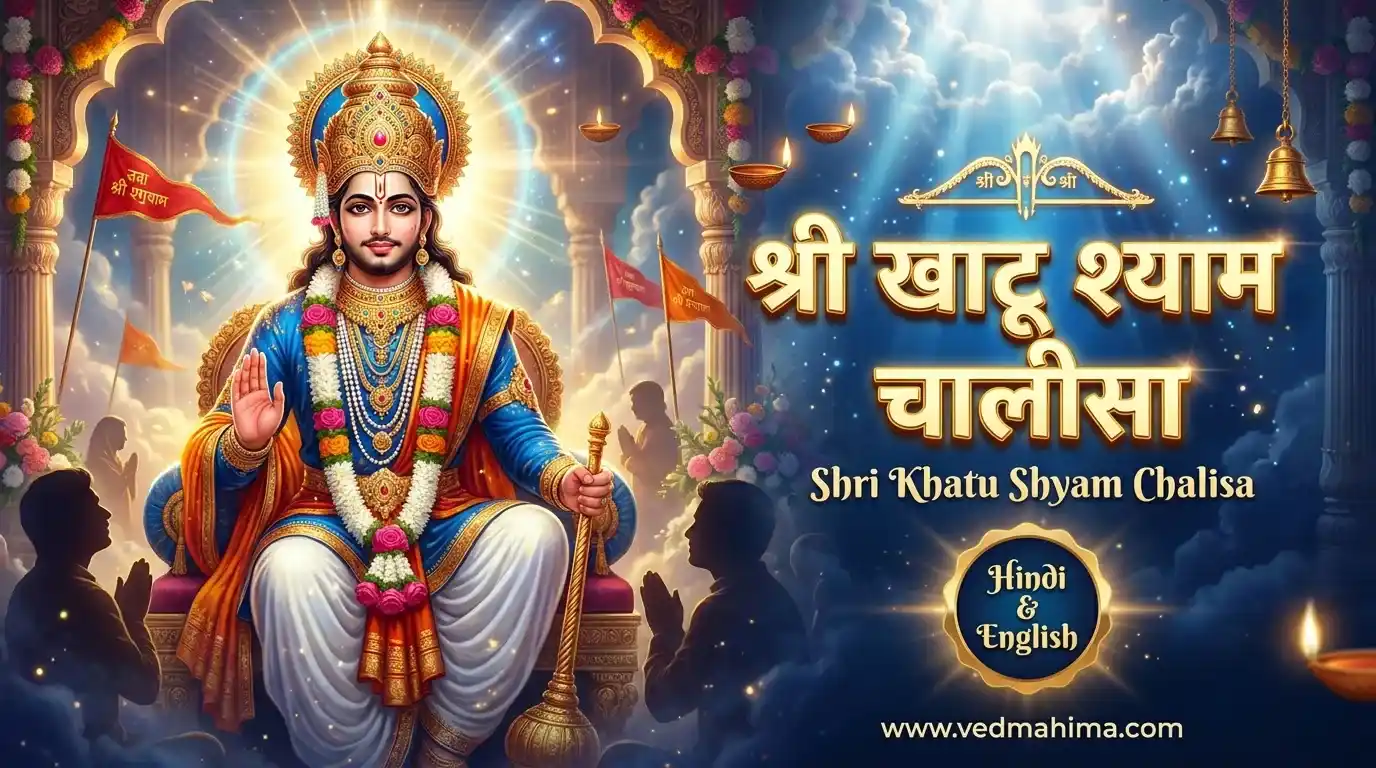
Shri Khatu Shyam Chalisa
Khatu Shyam Baba, Barbarik, Phalguna Mela, Ekadashi puja, hare ka sahara
Shri Guru Charanan Dhyaan Dhar,
Sumiri Sachchidanand.
Shyam Chaalisa Bhanat Hoon,
Rach Chaupai Chhand.
॥ Chaupai ॥
Shyam-Shyam Bhaji Baarambara,
Sahaj Hi Ho Bhavsagar Paara.
In Sam Dev Na Dooja Koi,
Deen Dayalu Na Daata Hoi.
Bheem Suputra Ahilawati Jaaya,
Kahi Bheem Ka Pautra Kahaaya.
Yah Sab Katha Kahi Kalpaantar,
Tanik Na Maano Ismein Antar.
Barbarik Vishnu Avtaara,
Bhaktan Hetu Manuj Tan Dhaara.
Vasudev Devki Pyaare,
Yashumati Maiya Nand Dulaare.
Madhusudan Gopal Murari,
Vrajkishor Govardhan Dhaari.
Siyaram Shri Hari Gobinda,
Deenpaal Shri Baal Mukunda.
Damodar Ran Chhod Bihari,
Nath Dwarkadhish Kharari.
Narhari Roop Prahlad Pyaara,
Khambh Phaad Hiranyakush Maara.
Radhaballabh Rukmani Kanta,
Gopi Vallabh Kans Hananta.
Manmohan Chit Chor Kahaaye,
Makhan Chori-Chori Kar Khaaye.
Murlidhar Yadupati Ghanshyama,
Krishna Patit Paavan Abhiraama.
Mayapati Lakshmipati Isha,
Purushottam Keshav Jagdeesha.
Vishwapati Tribhuvan Ujiyaara,
Deenbandhu Bhaktan Rakhwara.
Prabhu Ka Bhed Na Koi Paaya,
Shesh Mahesh Thake Muniraya.
Narad Sharad Rishi Yogindar,
Shyam-Shyam Sab Ratat Nirantar.
Kavi Kovid Kari Sake Na Ginanta,
Naam Apaar Athaah Ananta.
Har Srishti Har Yug Mein Bhaai,
Le Avtaar Bhakt Sukhdaai.
Hriday Maahi Kari Dekhu Vichaara,
Shyam Bhaje To Ho Nistaara.
Keer Padhavat Ganika Taari,
Bheelni Ki Bhakti Balihari.
Sati Ahilya Gautam Naari,
Bhai Shaapvash Shila Dukhaari.
Shyam Charan Raj Nit Laai,
Pahunchi Pati Lok Mein Jaai.
Ajamil Aru Sadan Kasai,
Naam Pratap Param Gati Paai.
Jaake Shyam Naam Adhaara,
Sukh Lahahi Dukh Door Ho Saara.
Shyam Sulochan Hai Ati Sundar,
Mor Mukut Sir Tan Peetambar.
Gale Baijanti Maal Suhaai,
Chhavi Anoop Bhaktan Maan Bhaai.
Shyam-Shyam Sumirahu Din-Raati,
Shaam Dupahari Aru Parbhaati.
Shyam Saarathi Jiske Rath Ke,
Rode Door Hoe Us Path Ke.
Shyam Bhakt Na Kahin Par Haara,
Bheer Pari Tab Shyam Pukaara.
Rasna Shyam Naam Ras Pee Le,
Jee Le Shyam Naam Ke Hi Le.
Sansari Sukh Bhog Milega,
Ant Shyam Sukh Yog Milega.
Shyam Prabhu Hain Tan Ke Kaale,
Man Ke Gore Bhole-Bhaale.
Shyam Sant Bhaktan Hitkaari,
Rog-Dosh Agh Naashe Bhaari.
Prem Sahit Jab Naam Pukaara,
Bhakt Lagat Shyam Ko Pyaara.
Khatu Mein Hain Mathuravasi,
Parbrahm Purn Avinashi.
Sudha Taan Bhari Murli Bajaai,
Chahu Dishi Nana Jahan Suni Paai.
Vriddh-Baal Jete Naari Nar,
Mugdh Bhaye Suni Bansi Ke Swar.
Daud-Daud Kar Sab Pahunche Jaai,
Khatu Mein Jahan Shyam Kanhai.
Jisne Shyam Swaroop Nihaara,
Bhav Bhay Se Paaya Chhutkaara.
॥ Doha ॥
Shyam Salone Sanwre,
Barbarik Tanu Dhaari.
Ichchha Purn Bhakt Ki,
Karo Na Laao Baari.
About Shri Khatu Shyam Chalisa
Its first half is a long song of Krishna''s names. The verses call Shyam by names such as Vasudev-Devaki''s beloved, Nand''s darling, Madhusudan, Gopal, Murari, Govardhan Dhari, Damodar, Ranchhod, Dwarkadhish, Radhaballabh, Rukmani Kant, the one who killed Kansa, and Murlidhar. They also recall the Narhari form that tore the pillar to kill Hiranyakashipu (see the Narasimha Chalisa). The meaning is plain: devotees see Khatu Shyam as the same divine power as Krishna (see the Krishna Chalisa and the Vishnu Chalisa), and the many names show that the Lord''s glory has no end.
The hymn then turns to the power of the Name. It recalls Ganika, who was freed by teaching a parrot to say the name, the Bhilni whose devotion is praised, Ahilya, who was released from her curse as stone by the dust of his feet, and Ajamil and Sadan Kasai, who attained a high state through the Name. The message is that no past is too heavy for sincere remembrance.
The later verses describe his form: lovely eyes, a peacock-feather crown, yellow garment and a Baijanti garland. The Chalisa says Shyam is dark in body but fair in heart, simple and innocent, and that a Shyam devotee is never defeated, since when trouble comes and he is called, Shyam becomes the charioteer of his path. It ends with the picture of the Lord at Khatu playing the flute, whose sound draws old and young alike, so that those who behold his form are freed from the fear of worldly life.
Devotees recite the Chalisa for courage, comfort in hardship and the fulfilment of sincere wishes. The popular titles "hare ka sahara" and "teen baan dhari" come from folk tradition and are not part of this text. These are matters of faith, and they are best taken as support alongside effort and practical help.
❓ Frequently Asked Questions
Question: Who is Khatu Shyam Ji, and how does the Chalisa describe him?
Answer: The Chalisa names him Barbarik, calls him an avatar of Vishnu who took a human form for the sake of devotees, and places him in the line of Bhima. It also addresses him with many names of Krishna, such as Madhusudan, Govardhan Dhari and Dwarkadhish, so devotees see Shyam Baba as Krishna himself.
Question: Why is the Chalisa full of Krishna''s names?
Answer: A long stretch of verses lists names like Gopal, Murari, Damodar, Ranchhod, Radhaballabh and Narhari, and mentions Krishna''s Narasimha form (see the Narasimha Chalisa). This follows the belief that Shyam is the same divine power as Krishna (see the Krishna Chalisa and Vishnu Chalisa).
Question: Which devotees does the Chalisa say were saved by taking the Lord''s name?
Answer: It recalls Ganika, who was taught by a parrot to say the name, the devoted Bhilni, Ahilya, who was freed from her curse by the dust of his feet, and Ajamil and Sadan Kasai, who attained a high state through the power of the name.
Question: What does "Shyam" mean here?
Answer: The Chalisa says Shyam is dark in body but fair of heart, simple and innocent. It describes his peacock-feather crown, yellow garment, Baijanti garland and the flute whose sound draws old and young alike to Khatu.
Question: Why is Khatu Shyam called "hare ka sahara"?
Answer: This is a popular tradition, not a phrase in this Chalisa. The Chalisa does say that a Shyam devotee is never defeated, and that when trouble comes, he should call on Shyam, who becomes the charioteer who clears the path.
Question: When is the best time to recite the Khatu Shyam Chalisa?
Answer: Early morning after a bath, or in the evening, with Ekadashi especially favoured. The Khatu Shyam fair at Khatu in Sikar district, Rajasthan, is held around Phalguna Shukla Ekadashi, and any time with sincere devotion is also fine.