Ahoi Ashtami Vrat Katha
Children''s long life, repentance, silver Syau, star arghya, mother''s fast
॥ Introduction ॥
Ahoi Ashtami is a highly sacred and emotionally significant fasting day in Sanatan Dharma, observed on the Ashtami Tithi of the dark fortnight (Krishna Paksha) in the month of Kartik. Dedicated to Ahoi Mata (an incarnation of Goddess Parvati), this auspicious fast is kept by mothers for the long life, well-being, and prosperity of their children. It holds a unique place in Hindu traditions, symbolizing a mother’s selfless love and her protective shield over her children from any unforeseen miseries or negative energies.
॥ Importance ॥
The profound importance of Ahoi Ashtami lies in its power to bestow the blessing of children and protect them from sudden mishaps. Falling just a few days before Deepawali, this fast requires immense dedication and strict mental discipline. Traditional beliefs highlight that observing this fast not only removes any past karmic obstacles related to children but also restores health, wisdom, and life to suffering descendants, filling the household with laughter, material abundance, and peace.
॥ Puranic Reference ॥
The divine reference of this holy fast is traditionally recorded through the folklore of a wealthy merchant’s family. The narrative profoundly establishes how an accidental sin can bring severe hardships upon a family and how a sincere confession, combined with regular devotion to Goddess Ahoi, can alter a dark destiny. The scriptural reference emphasizes the creation of a silver "Syau" (porcupine) pendant, which represents the divine motherly energy that clears all maternal grief and karmic debts.
॥ Story ॥
Long ago, there lived a wealthy merchant (Sahukar) who had seven sons. Just before the auspicious festival of Deepawali, the merchant’s wife decided to clean and renovate her house. To fetch some fine clay for plastering the walls, she went to a nearby forest area near a mine.
While she was digging the soil with a spade, her tool accidentally struck a porcupine’s den (Sehi’s burrow). Tragically, a young cub of the porcupine was hit by the sharp spade and died on the spot. The merchant’s wife was filled with absolute sorrow and deep guilt, but it was all an unfortunate accident done in complete ignorance. Mourning the dead cub, she returned home with a heavy heart.
A few days later, a terrible tragedy struck her family as her eldest son suddenly passed away. Within a span of a year, one after another, all of her seven sons died under mysterious circumstances. The house was engulfed in ultimate darkness and mourning.
One day, while weeping inconsolably, she shared her deep grief and the old incident of the porcupine’s cub with neighboring women. The wise women comforted her and said, "Since you did not commit that sin intentionally, half of your burden and sin have already been washed away by your honest confession. Now, to completely redeem yourself, you must worship Bhagwati Ahoi Mata by sketching the images of the porcupine and its cub, and seek her divine forgiveness."
The women further instructed that all mothers should prepare a silver pendant called "Syau" and wear it around their necks like a sacred locket during the prayers. The merchant’s wife followed their advice with absolute faith. On the upcoming Kartik Krishna Ashtami, she observed a strict fast and performed the ritualistic worship of Ahoi Mata.
Goddess Ahoi was deeply moved by her sincere repentance and devotion. By the divine grace of the Mother, the merchant’s wife miraculously received all her seven sons back alive and healthy. Since that auspicious day, the beautiful tradition of the Ahoi Ashtami fast has been passed down through generations.
॥ Moral of the Story ॥
- Even unintended harm to living creatures can carry karmic consequences; hence, awareness towards nature and animals is vital.
- Honest confession of one''s mistakes before a community or elder dissolves a significant portion of guilt and sin.
- A mother''s absolute devotion and willingness to undergo hardships can reverse the most tragic destinies of her children.
- Seeking shelter under the Divine Mother with complete surrender guarantees protective grace and miraculous restoration of life.
॥ Vrat & Worship Method ॥
- Wake up during Brahma Muhurta on Kartik Krishna Ashtami, clean the house, take a purifying bath, and take a solemn vow (Sankalpa) for your children''s well-being. This fast is kept strictly Nirjala (without water) from sunrise until the stars appear in the evening.
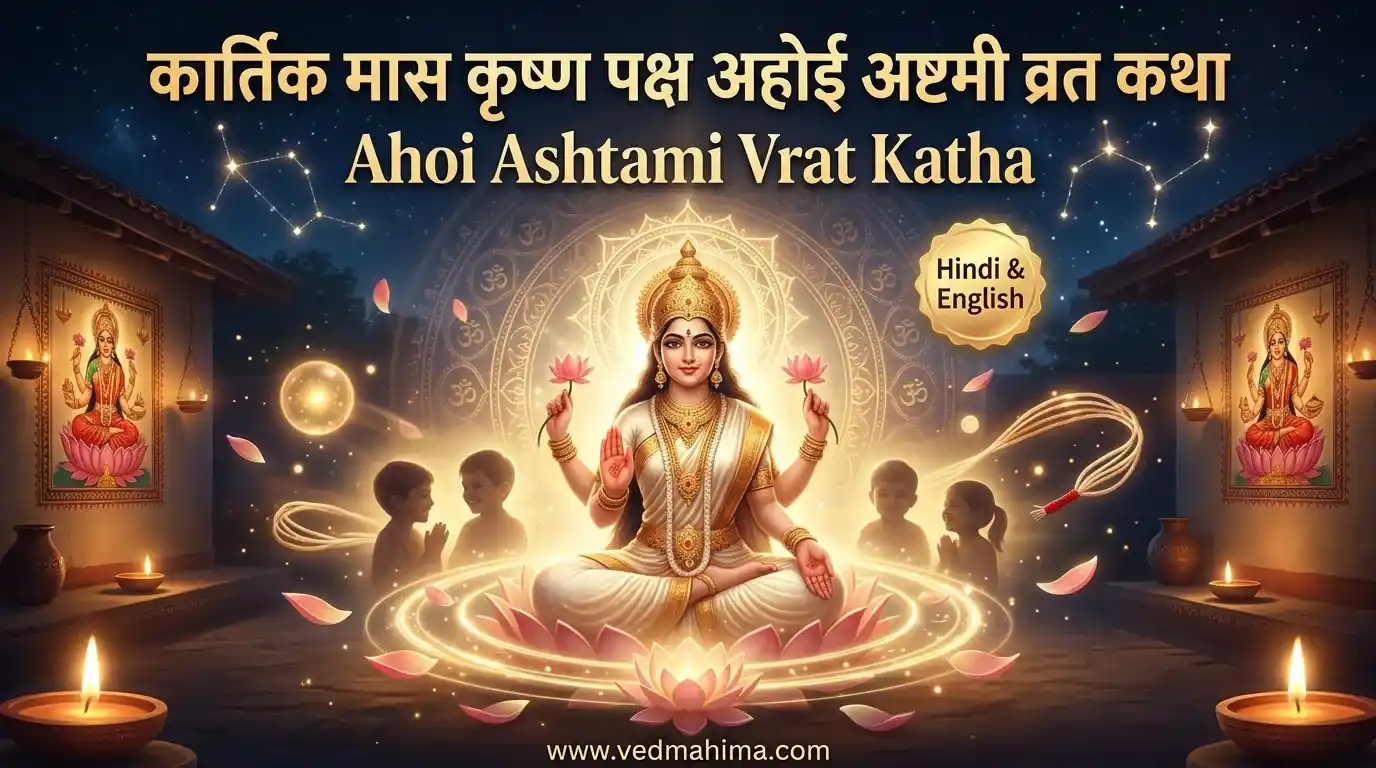
- Draw an image of Ahoi Mata, a porcupine (Sehi), and its seven cubs on the wall, or place a printed picture of Ahoi Mata in the temple area.
- Prepare a sacred silver "Syau" pendant, string it with silver beads in a red thread, and place it near the altar for worship.
- Offer fresh water in a kalash, along with grains, sweets (such as Halwa or Pua), and perform the ritualistic worship with incense, lamps, and flowers.
- Listen to or recite the sacred Ahoi Ashtami Vrat Katha intently while holding grains of wheat or rice in your hand.
- In the evening, after the stars appear in the sky, offer Arghya (water libation) to the stars using the Kalash water, perform the Aarti, wear the Syau pendant, and break the fast (Parana) by consuming the holy water and sweet Puri or Halwa offered to the deity.
॥ Benefits ॥
- Acts as a divine protective shield, ensuring the long life, excellent health, and safety of children from accidents.
- Blesses childless couples with virtuous offspring and removes any spiritual blockages related to childbirth.
- Erases deep past karmas and unintended sins related to harming innocent mute creatures.
- Brings immense peace, domestic harmony, material prosperity, and emotional stability to the household.
About Ahoi Ashtami Vrat Katha
The page also gives the vrat and puja method (Brahma Muhurta sankalp, the Ahoi wall drawing, kalash, Syau, bhog of halwa and puri, arghya to the stars), the moral points of the story and the benefits believed in tradition. The fast is traditionally nirjala, but pregnant women, the elderly and the unwell may take fruit or milk, and anyone with a health condition should follow a doctor''s advice.
Versions of the story and local customs differ between regions. Related pages: Karwa Chauth Vrat Katha, Parvati Chalisa and Ganesh Chalisa.
❓ Frequently Asked Questions
Question: What is Ahoi Ashtami, and when is it kept?
Answer: Ahoi Ashtami is a fast kept by mothers for their children''s long life and well-being. It falls on Kartik Krishna Ashtami (usually October or November), a few days before Diwali. In the amanta calendar of Gujarat, Maharashtra and the south, the same day falls in Ashwin, so please follow your local panchang.
Question: Who is Ahoi Mata?
Answer: In tradition, Ahoi Mata is regarded as a form of Goddess Parvati, worshipped for the protection of children (see the Parvati Chalisa). Her picture is drawn on the wall with a porcupine (sehi) and its cubs.
Question: What is the story of the Ahoi Ashtami Katha?
Answer: A merchant''s wife, digging clay before Diwali, accidentally kills a porcupine cub with her spade. Within a year she loses all seven sons. Neighbouring women tell her that her honest repentance has lifted half the burden, and advise her to worship Ahoi Mata. She keeps the fast every Kartik Krishna Ashtami, and the Goddess restores her sons.
Question: What is the silver "Syau" and how long is it worn?
Answer: The Syau is a small silver pendant that represents the porcupine from the story. It is strung on a thread, worshipped and worn after the puja. In many families it is worn until Diwali or Bhai Dooj, though customs differ.
Question: Is the fast nirjala, and can I take anything?
Answer: Traditionally it is kept without food or water from sunrise until the stars appear. Pregnant women, the elderly and those with a health condition may take fruit or milk, and should follow a doctor''s advice.
Question: When and how is the fast broken?
Answer: After the stars appear, offer arghya to them with water from the kalash, perform the aarti and break the fast with that water and satvik prasad such as puri or halwa. Star-sighting time differs by city, so please check a local panchang. See also the Karwa Chauth Vrat Katha.