Shri Vaishno Devi Chalisa
Vaishno Devi Trikuta Dham, Shridhar bhandara, Bhairon and Banganga story, Charan Paduka, Ardhkuwari cave, Navratri paath vidhi
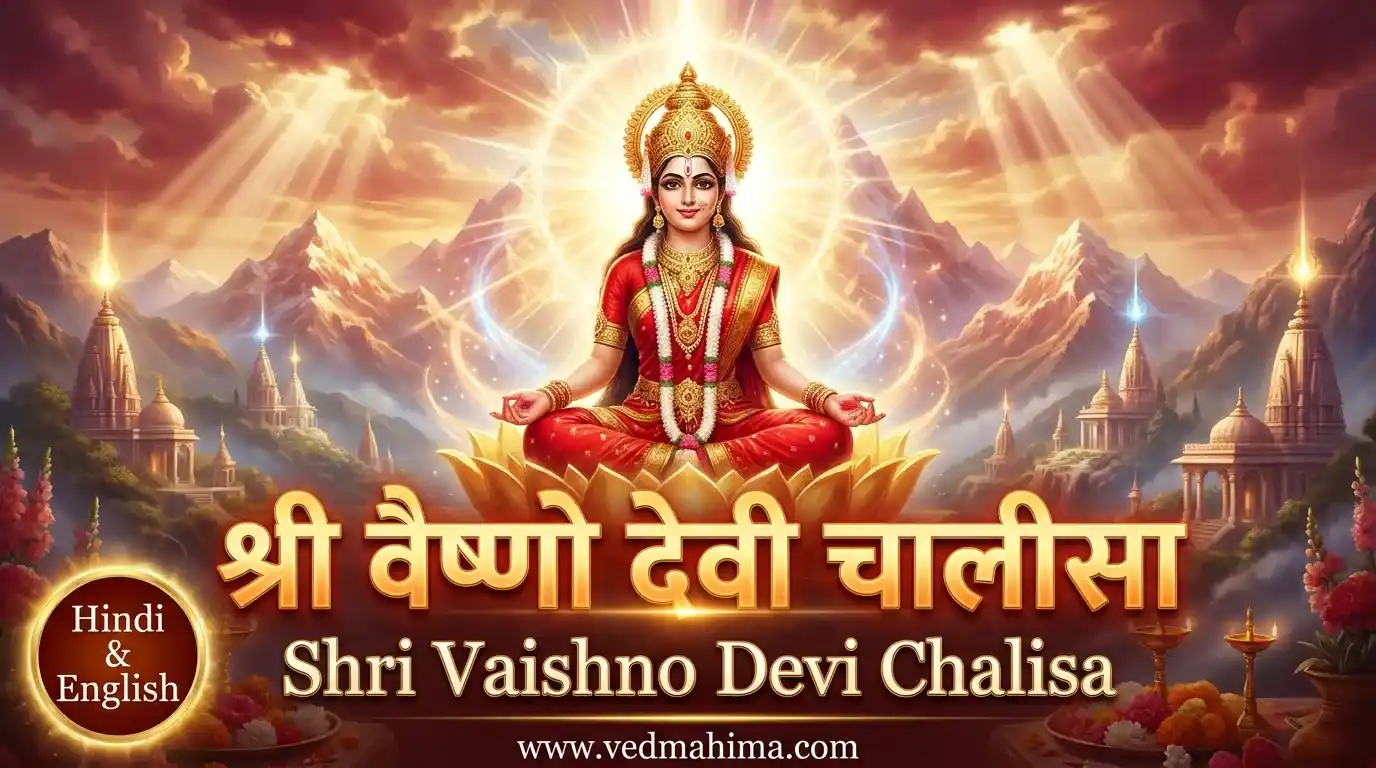
Garud vahini Vaishnavi,
Trikuta parvat dham.
Kaali, Lakshmi, Saraswati,
Shakti tumhein pranam.
॥ Chaupai ॥
Namah namah Vaishno varadani,
Kali kaal mein shubh kalyani.
Mani parvat par jyoti tumhari,
Pindi roop mein ho avatari.
Devi devta ansh diyo hai,
Ratnakar ghar janm liyo hai.
Kari tapasya Ram ko paaun,
Treta ki shakti kahlaun.
Kaha Ram Mani parvat jao,
Kaliyug ki Devi kahlao.
Vishnu roop se Kalki bankar,
Loonga shakti roop badalkar.
Tab tak Trikuta ghaati jao,
Gufa andheri jaakar pao.
Kaali-Lakshmi-Saraswati Maa,
Karengi poshan Parvati Maa.
Brahma, Vishnu, Shankar dware,
Hanumat, Bhairon prahari pyare.
Riddhi, Siddhi chanvar dolaaven,
Kaliyug-vaasi poojan aaven.
Paan supari dhwaja nariyal,
Charanamrit charanon ka nirmal.
Diya falit var Maa muskaai,
Karan tapasya parvat aai.
Kali kaal ki bhadki jwala,
Ik din apna roop nikala.
Kanya ban Nagarota aai,
Yogi Bhairon diya dikhai.
Roop dekh sundar lalchaya,
Peeche-peeche bhaaga aaya.
Kanyaon ke saath mili Maa,
Kaul-Kandouli tabhi chali Maa.
Deva Maiya darshan deena,
Pawan roop ho gayi praveena.
Navratron mein leela rachai,
Bhakt Shridhar ke ghar aai.
Yogin ko bhandara deeni,
Sabne ruchikar bhojan keena.
Maans, madira Bhairon maangi,
Roop pawan kar ichchha tyagi.
Baan maarakar Ganga nikali,
Parvat bhaagi ho matwali.
Charan rakhe aa ek shila jab,
Charan-paduka naam pada tab.
Peeche Bhairon tha balkari,
Chhoti gufa mein jaay padhaari.
Nau maah tak kiya nivaasa,
Chali fodkar kiya prakaasha.
Aadya Shakti-Brahm Kumari,
Kahlaai Maa Aad Kunwari.
Gufa dwar pahunchi muskaai,
Langur Veer ne aagya paai.
Bhaaga-bhaaga Bhairon aaya,
Raksha hit nij shastra chalaya.
Pada sheesh ja parvat upar,
Kiya kshama ja diya use var.
Apne sang mein pujwaaungi,
Bhairon ghaati banwaungi.
Pehle mera darshan hoga,
Peeche tera sumiran hoga.
Baith gayi Maa pindi hokar,
Charanon mein bahta jal jhar jhar.
Chaunsath Yogini-Bhairon barvan,
Sapt Rishi aa karte sumaran.
Ghanta dhwani parvat par baaje,
Gufa niraali sundar laage.
Bhakt Shridhar poojan keena,
Bhakti seva ka var leena.
Sevak dhyaun tumko dhyaya,
Dhwaja va chola aan chadhaya.
Sinh sada dar pahra deta,
Panja sher ka dukh har leta.
Jambu dweep Maharaj manaya,
Sar sone ka chhatra chadhaya.
Heere ki moorat sang pyari,
Jage akhand ik jot tumhari.
Ashwin Chaitra Navratre aaun,
Pindi Rani darshan paaun.
Sevak tera sharan tihari,
Haro Vaishno vipat hamari.
॥ Doha ॥
Kaliyug mein mahima teri,
Hai Maa aparampaar.
Dharm ki haani ho rahi,
Pragat ho avtaar.
About Shri Vaishno Devi Chalisa
The first verses introduce the Goddess. They call her the giver of boons and a blessed Mother of Kali Yuga, whose light shines on Mani Parvat, where she has appeared as a Pindi (a sacred stone form). The gods gave a part of their power to make her, and she took birth in the house of Ratnakar. She did tapasya to obtain Lord Ram and became known as the Shakti of Treta Yuga. Ram told her to go to Mani Parvat and become the Devi of Kali Yuga, and said that he would come as Kalki, take her in Shakti form and, until then, she should go to the Trikuta valley and find a dark cave (see the Ram Chalisa). The Chalisa adds that Kali, Lakshmi and Saraswati, nourished by Mother Parvati, live there, that Brahma, Vishnu and Shankar stand at her door with Hanuman and Bhairon as dear guards (see the Hanuman Chalisa and the Bhairav Chalisa), and that Riddhi and Siddhi wave the chanwar.
The middle verses tell the story of her appearance. When the fire of Kali Yuga flared, she came to Nagarkot as a girl, and the yogi Bhairon saw her, was struck by her beauty and followed her. She met other girls and moved on to Kaul-Kandoli. During Navratri she came to the house of her devotee Shridhar, where a bhandara was given to the yogis, who ate happily. There Bhairon asked for meat and liquor, and she gave up that request and showed her pure form. She then fled the mountain, shot an arrow that brought out Ganga (the Banganga river), and the rock where she put her foot became Charan Paduka.
Bhairon followed her closely, and she entered a small cave, the Adi Kunwari (Ardhkuwari) cave, where she stayed for nine months before breaking out at the other side. At the gate of the cave, Langur Veer received her order, and Bhairon came running and raised his weapon. In the fight, his head fell on the mountain above. The Chalisa says that the Goddess forgave him and granted a boon: she would have him worshipped along with her, a Bhairon Ghati would be made, and devotees must have her darshan first and only after it remember him.
The last verses describe the shrine. The Mother sat as a Pindi, water flows from the rock at her feet, the 64 yoginis, Bhairon and the Saptarishis remember her, and bells ring on the mountain. A lion guards her door and its paw takes away suffering. Dhyanu bhakt offered a flag and chola, and the Maharaj of Jambu Dweep gave a golden umbrella. An akhand jyot burns beside her diamond image. Devotees offer paan, supari, a flag, a coconut and charanamrit. The doha closes by asking the Mother to appear again when dharma declines.
Devotees recite it during Chaitra and Sharad Navratri and before or during the yatra for protection, strength and the fulfilment of sincere wishes. These are matters of faith. The legends come from tradition and different tellers vary some details, so they are best read as devotional stories.
❓ Frequently Asked Questions
Question: Who is Vaishno Devi, and where is her shrine?
Answer: The Chalisa calls her Garud Vahini Vaishnavi of Trikuta Parvat, and says she is the Shakti who appears as a pindi (sacred stone form) on Mani Parvat. Her cave shrine is in the Trikuta hills near Katra in Jammu and Kashmir. The opening doha salutes her as Kali, Lakshmi and Saraswati (see the Kali Chalisa, Mahalakshmi Chalisa and Saraswati Chalisa).
Question: Why did she do tapasya, and what did Lord Ram tell her?
Answer: The Chalisa says she took birth in Ratnakar''s house, did tapasya to obtain Ram, and became known as the Shakti of Treta Yuga. Ram told her to go to Mani Parvat and become the Devi of Kali Yuga, and promised that he would come as Kalki and take her in Shakti form. Until then she was to go to the Trikuta valley and find a dark cave (see the Ram Chalisa).
Question: What is the story of Bhakt Shridhar and the bhandara?
Answer: The Chalisa says that during Navratri the Goddess came to the house of her devotee Shridhar in the form of a girl, and a bhandara (community feast) was given to the yogis, who all ate with pleasure. According to the verses, Bhairon asked for meat and liquor at that feast, and the Goddess gave up that request and showed her pure form.
Question: What happened with Bhairon, and why is Bhairon Ghati part of the pilgrimage?
Answer: The Chalisa says that Bhairon, a yogi, was struck by her beauty and followed her from Nagarkot (Nagarota). She fled the mountain, shot an arrow that brought out Ganga (Banganga), and her footprint on a rock gave the place the name Charan Paduka. She stayed for nine months in a small cave, the Adi Kunwari (Ardhkuwari) cave, then broke out. At the cave gate Langur Veer stopped Bhairon, and in the fight his head fell on the mountain above. The Goddess forgave him, and promised that devotees would see her first and then remember him at Bhairon Ghati.
Question: What does the Chalisa say about the holy pindi and the offerings?
Answer: It says she sat as a pindi, water flows at her feet, the 64 yoginis and the Saptarishis remember her, and bells ring on the mountain. A lion guards the door, and devotees offer paan, supari, flag, coconut, chola and charanamrit. It also says that Maharaj of Jambu Dweep offered a golden umbrella and that her akhand jyot burns beside a diamond image.
Question: When and how should the Vaishno Devi Chalisa be recited?
Answer: During Chaitra and Sharad Navratri (the Chalisa mentions Ashwin and Chaitra), or on any auspicious day, with a ghee lamp lit before the Goddess. Pilgrims often recite it before or during the yatra. Check the Shri Mata Vaishno Devi Shrine Board for registration and current rules before travelling.


